Release Date:2026-07-10 16:00:16 Popularity:
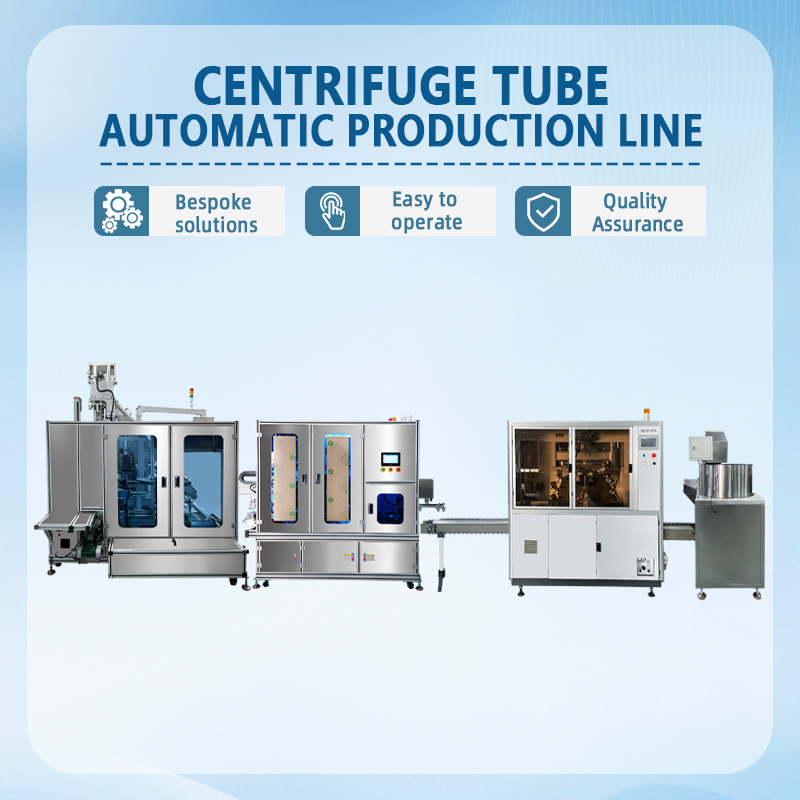
An automated production line is a manufacturing model that utilizes automation equipment, control systems, conveying systems, inspection systems, and actuators to manage the production process—from raw materials and semi-finished goods to finished products—in a continuous, standardized, and intelligent manner. Compared to traditional manual operations, automated production lines enable the seamless integration of various stages—such as automatic feeding, assembly, inspection, packaging, and palletizing—thereby significantly boosting production efficiency and stability. Depending on industry and product requirements, these lines can be applied across a wide range of sectors, including medical consumables, electronic components, automotive parts, hardware, plastic products, household goods, food packaging, and personal care products, offering broad application prospects.

What are the advantages of automated production lines?
Increased production efficiency: The most notable advantage of automated production lines is high efficiency. Equipment can operate continuously around the clock, minimizing idle time and operational gaps between manual tasks; this fosters collaborative workflows across stations and significantly increases output per unit of time. For enterprises handling large-volume orders, automated production lines effectively shorten production cycles and accelerate market response times.
Enhanced product quality: Manual operations are susceptible to factors such as operator experience, fatigue, and mood, which can compromise product consistency. Automated production lines utilize high-precision positioning, servo control, machine vision inspection, and intelligent sensing technologies to ensure the precise execution of every process step. This reduces issues such as missing parts, incorrect assembly, misalignment, and improper fitting, thereby improving product pass rates and batch-to-batch stability.
Reduced labor costs: Automated production lines can replace multiple high-repetition, labor-intensive workstations, reducing a company's reliance on manual labor and cutting costs associated with recruitment, training, and management. Furthermore, the stable operation of automated equipment minimizes rework and scrap caused by human error, further lowering overall operating costs.
Support for flexible manufacturing: Modern markets increasingly demand product diversity and customization, requiring enterprises to frequently switch between product models and manufacturing processes. Through modular design and programmable control, automated production lines enable rapid model switching and functional expansion. This allows companies to meet production needs characterized by high product variety, small batch sizes, and fast delivery, while also maximizing equipment utilization.
Facilitates digital management: Automated production lines serve as the foundation not only for automated operation but also for intelligent management. By integrating with MES and ERP systems as well as industrial internet platforms, enterprises can achieve production data collection, quality traceability, equipment status monitoring, and remote operations and maintenance, thereby making factory management more transparent, efficient, and traceable.

Guanshentai Automated Production Line Solutions
As a specialized enterprise in the R&D and manufacturing of automation equipment, Guanshentai has long focused on developing automated production lines and custom (non-standard) automation equipment, backed by extensive project experience and a mature technical team. Catering to diverse industries, products, and processes, Guanshentai offers comprehensive, one-stop services—ranging from conceptual design, equipment R&D, and manufacturing/installation to after-sales support—truly delivering solutions that are "custom-tailored to needs and precisely matched to requirements."
Guanshentai’s automated production lines incorporate advanced PLC control systems, servo drive technology, industrial robots, and machine vision inspection systems. They are characterized by stable operation, high assembly precision, strong scalability, and ease of maintenance. The equipment supports a wide range of functions—including automatic feeding, positioning, assembly, inspection, packaging, and palletizing—helping enterprises build efficient, intelligent, and sustainable production systems.
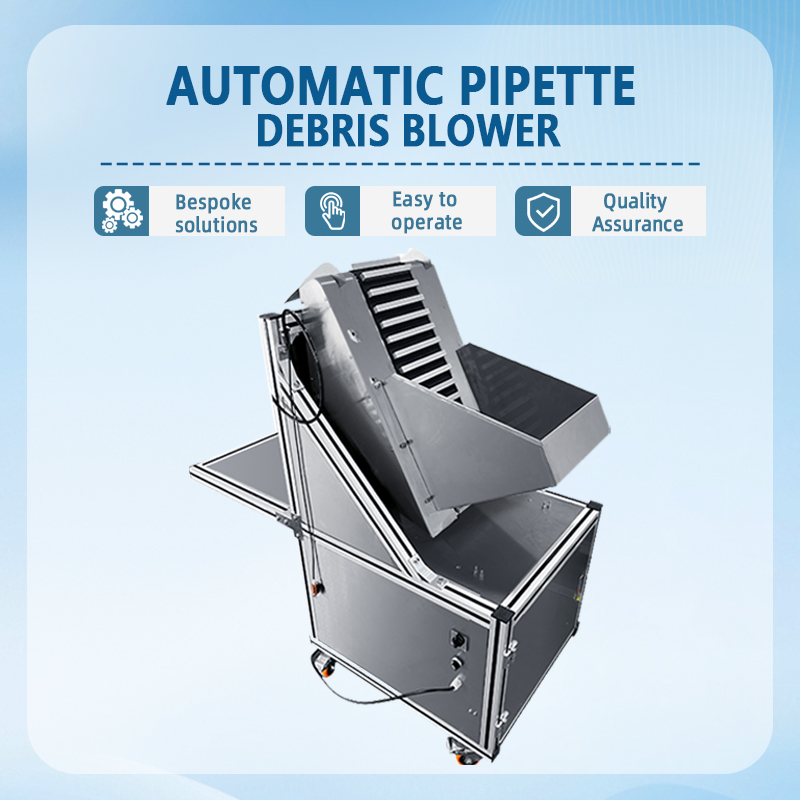
Currently, Guanshentai’s automated production lines are widely used across industries such as medical consumables, electronic components, automotive parts, hardware accessories, plastic products, household goods, and laboratory consumables. For instance, they facilitate the automated assembly and packaging of products like centrifuge tubes, pipettes, reagent kits, sampling swabs, syringes, O-rings, connectors, clothes hangers, and trouser racks, providing customers with high-quality, high-efficiency support for smart manufacturing.
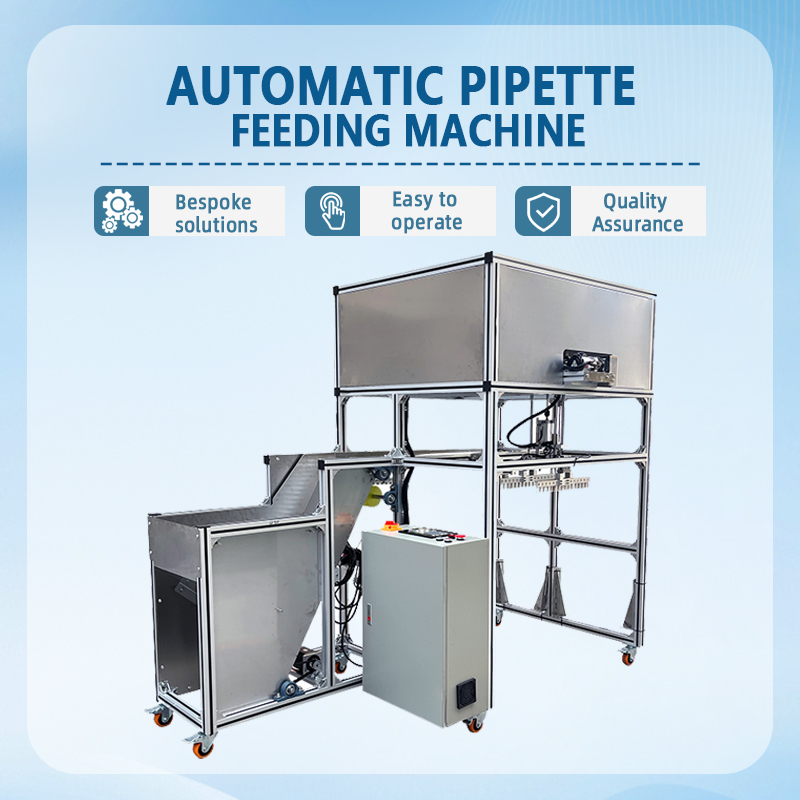
Furthermore, Guanshentai can integrate its automated production lines with automatic feeders, inspection equipment, packaging machines, robotic handling systems, and MES (Manufacturing Execution System) platforms. This enables enterprises to establish a complete automation chain—from raw components to finished product warehousing—while achieving digitalization, visualization, and traceability throughout the production process.

Amidst increasingly fierce market competition, enterprises must not only boost production efficiency but also continuously optimize product quality, cost control, delivery speed, and management capabilities. In this context, the advantages of automated production lines have become evident, serving as a vital tool for reducing costs, increasing efficiency, and enhancing core competitiveness. As a specialist manufacturer of automation equipment, Guanshentai is dedicated to providing efficient, stable, and intelligent production line solutions that accelerate the pace of smart manufacturing upgrades for its clients.