Release Date:2026-10-06 16:47:39 Popularity:
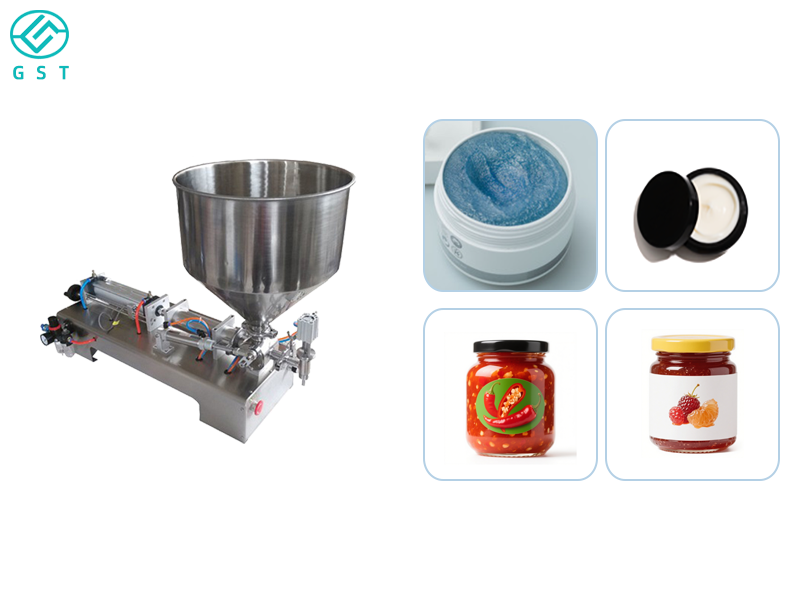
Small-scale semi-automatic quantitative filling machines are suitable for filling small to medium batches of products. They primarily rely on manual assistance in feeding or placing containers, after which the machine automatically completes the quantitative filling. The equipment typically consists of a filling mechanism, a metering system, a pneumatic or electric actuator, a control system, and an operation panel. During operation, the operator places the containers to be filled in the designated position, and the machine completes the quantitative filling according to preset filling parameters. Compared to completely manual filling, small-scale semi-automatic quantitative filling machines improve filling consistency and production efficiency while retaining high operational flexibility. Depending on the characteristics of different materials, piston pump, peristaltic pump, and gear pump filling methods can be used, suitable for liquids, emulsions, pastes, and some free-flowing materials.
Core advantages of small-scale quantitative semi-automatic filling machine
Compact size and space-saving design: For laboratories, small factories, and production workshops, the space occupied by the equipment is a key factor to consider when purchasing. Small, quantitative semi-automatic filling machines have a relatively compact structure and can be flexibly arranged according to the available space, requiring no large factory area, making them suitable for small-scale production scenarios.
More stable quantitative filling: Traditional manual filling relies mainly on experience to control the amount of liquid or paste, which is prone to deviations in filling volume. Small-scale semi-automatic quantitative filling machines use metering mechanisms and control systems to set filling parameters, ensuring that each filling is performed according to a uniform standard, improving the consistency of product packaging weight and volume.
Simple and flexible operation: Compared to complex fully automatic production lines, small-scale quantitative semi-automatic filling machines have a simpler operation process and can usually be used after basic training. For enterprises producing multiple varieties in small batches, filling parameters can be adjusted at any time according to different products, improving production flexibility.
Relatively controllable investment costs: For companies just starting their automation upgrades, building a large-scale production line at once may require a significant investment. Small-scale, semi-automatic quantitative filling machines can serve as starting equipment for production automation, improving production efficiency while helping companies control equipment investment and reserving space for future upgrades to fully automated production lines.
Wide range of applicable products: The small-scale quantitative semi-automatic filling machine can be configured according to the characteristics of different materials, and is suitable for beverages, edible oils, sauces, hand sanitizers, skin care products, disinfectants, lubricants, reagents, and some ointments. By changing the filling mechanism or adjusting the parameters, it can meet the production needs of different products.
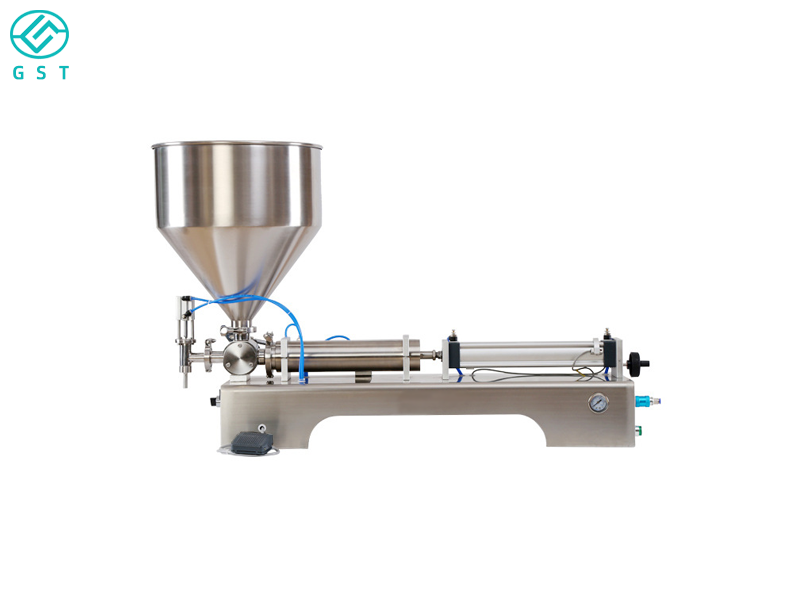
Guanshengtai Small Quantitative Semi-Automatic Filling Machine Solution
As a professional manufacturer of small-scale quantitative semi-automatic filling machines, Guanshengtai has long focused on the research and development and manufacturing of automatic filling equipment, non-standard automated equipment and intelligent production lines. We can provide customized filling solutions according to the characteristics of customers' products and production needs.
Guanshengtai offers semi-automatic filling equipment in various configurations, including single-head and double-head models, tailored to product viscosity, filling capacity, container specifications, and production cycle time. The equipment can employ different metering methods based on the actual process and is equipped with anti-drip filling heads, storage tanks, foot pedal controls, and a human-machine interface to enhance ease of use.
In the food industry, it can be used for filling edible oils, honey, sauces, beverages, and other applicable liquid products; in the daily chemical industry, it can be used for hand sanitizers, shampoos, shower gels, skin care products, and other products; in pharmaceutical and laboratory settings, it can be used for filling applicable liquid and paste products according to product process requirements; in the industrial field, it can be used for quantitative filling of products such as lubricants and cleaning solutions.
For customers whose production capacity is gradually increasing, Guanshengtai can also match small-scale quantitative semi-automatic filling machines with automatic capping machines, labeling machines, conveyors and testing equipment to gradually upgrade from single-machine filling to semi-automatic and automatic production methods.
When selecting a small-scale, semi-automatic quantitative filling machine, businesses should focus on filling speed and quantitative control for low-viscosity liquids; for medium- to high-viscosity liquids or pastes, they need to pay attention to filling pressure, piston structure, and anti-drip effect. The bottle opening size and packaging form of different containers will also affect the design of the filling head and clamps.
In addition, attention should be paid to the ease of operation, cleaning and maintenance methods, and the quality of core components. For companies engaged in long-term production, equipment stability and manufacturer after-sales service are equally important.
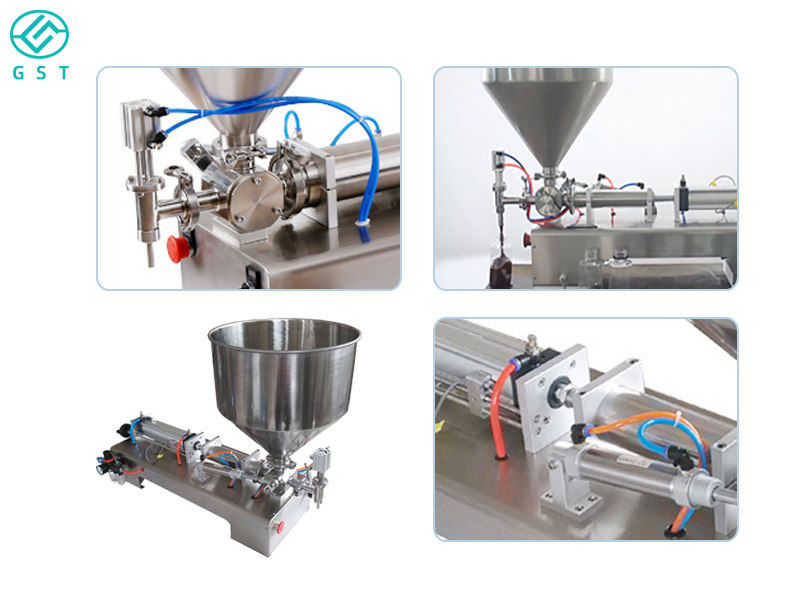
As the demand for automated production continues to grow among small and medium-sized enterprises (SMEs), small-scale semi-automatic quantitative filling machines will place greater emphasis on accurate metering, ease of operation, rapid changeover, and modular design. Simultaneously, with increasingly diversified order structures, small-scale filling equipment needs to possess better flexible production capabilities, adapting to different product specifications and packaging requirements through simple adjustments. For SMEs in the manufacturing sector, choosing a suitable small-scale semi-automatic quantitative filling machine can improve filling efficiency and product consistency while controlling equipment investment, representing a practical approach to upgrading production automation.