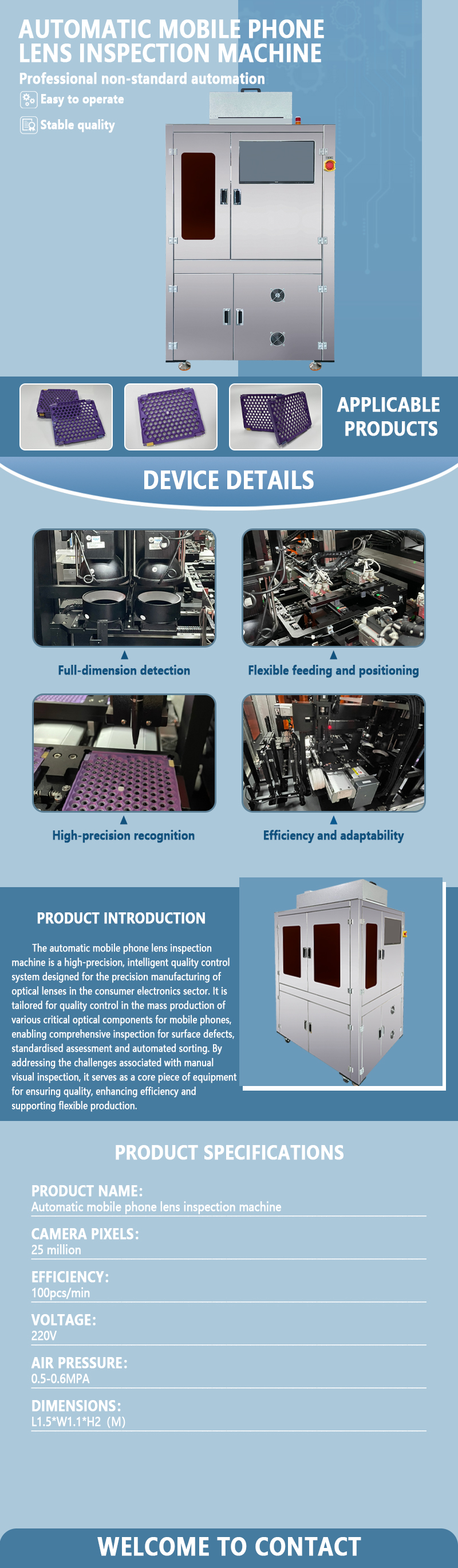
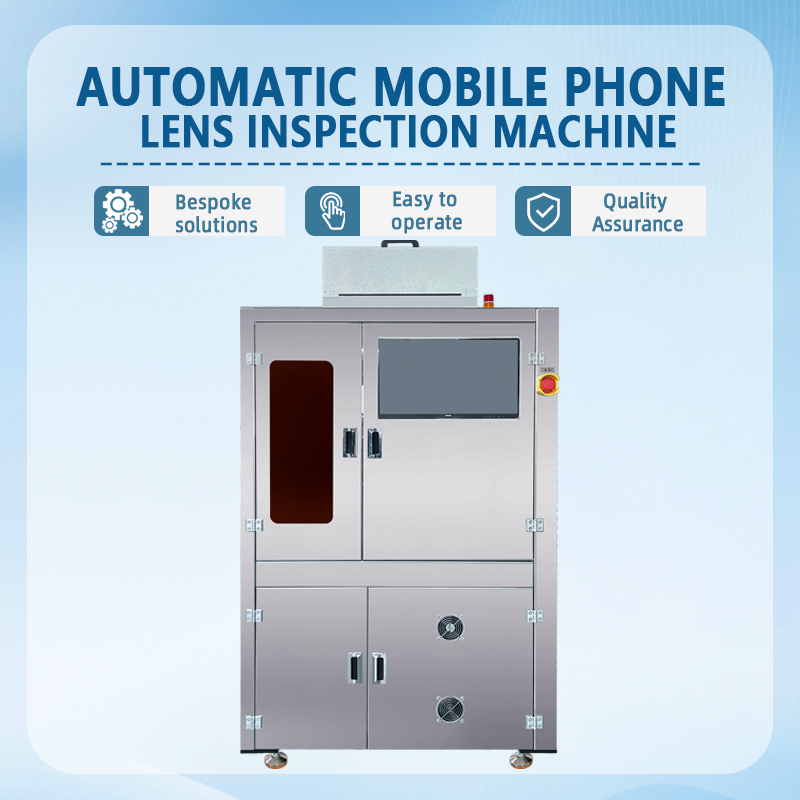
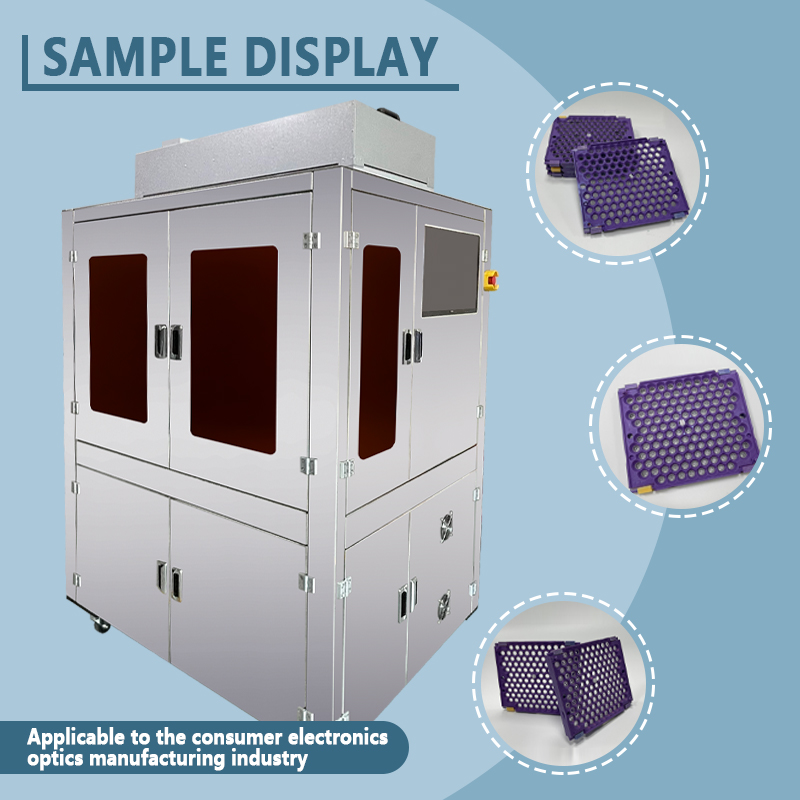
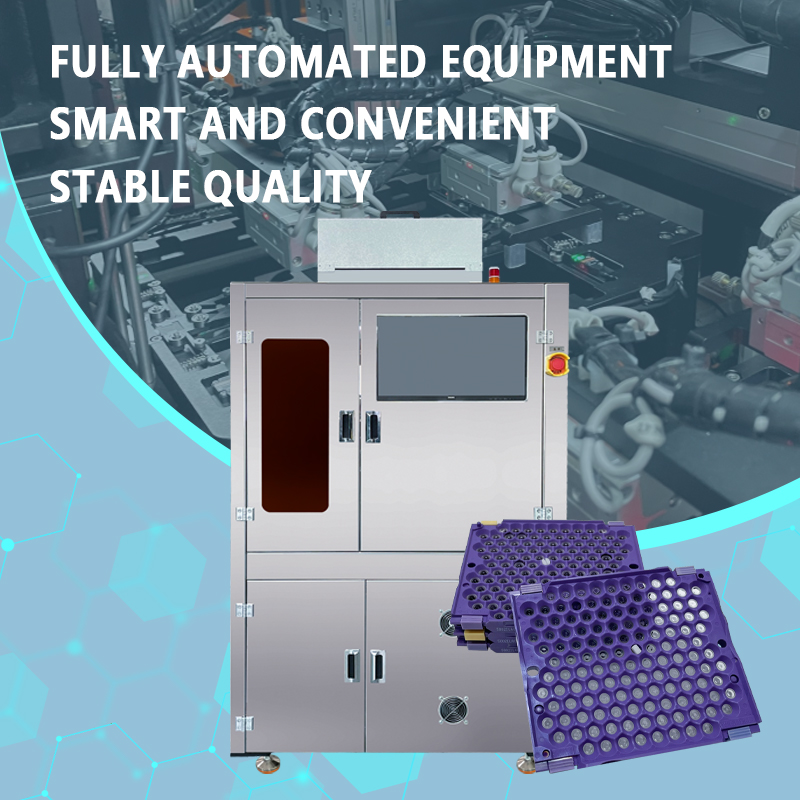
The Guanshentai automatic inspection machine for mobile phone lenses is a high-efficiency, specialized system designed for the fully automated inspection of surface defects and dimensional accuracy
The Guanshentai automatic inspection machine for mobile phone lenses is a high-efficiency, specialized system designed for the fully automated inspection of surface defects and dimensional accuracy in optical components—such as mobile phone camera lenses, screen cover glass, and fingerprint sensor covers. The equipment integrates an automatic feeding and sorting system, a multi-station rotary conveyor, multi-angle optical inspection modules, a precision dimensional measurement system, and an automated sorting, rejection, and counting/output mechanism. It enables comprehensive, in-line inspection of critical parameters—including surface scratches, bubbles, impurities, edge chipping, and dimensional deviations—at speeds ranging from 300 to 600 units per minute, effectively replacing traditional manual visual inspection.
Technical parameters:
Model Number: GST-WJ021A
Sizes:L1.5*W1.1*H2 (M)
Production Capacities: 100pcs/min
Power (Output): 3KW
VOLTAGE:220V
AIR PRESSURE:0.5-0.6MPA
Customized Support: Yes
Key Advantages:
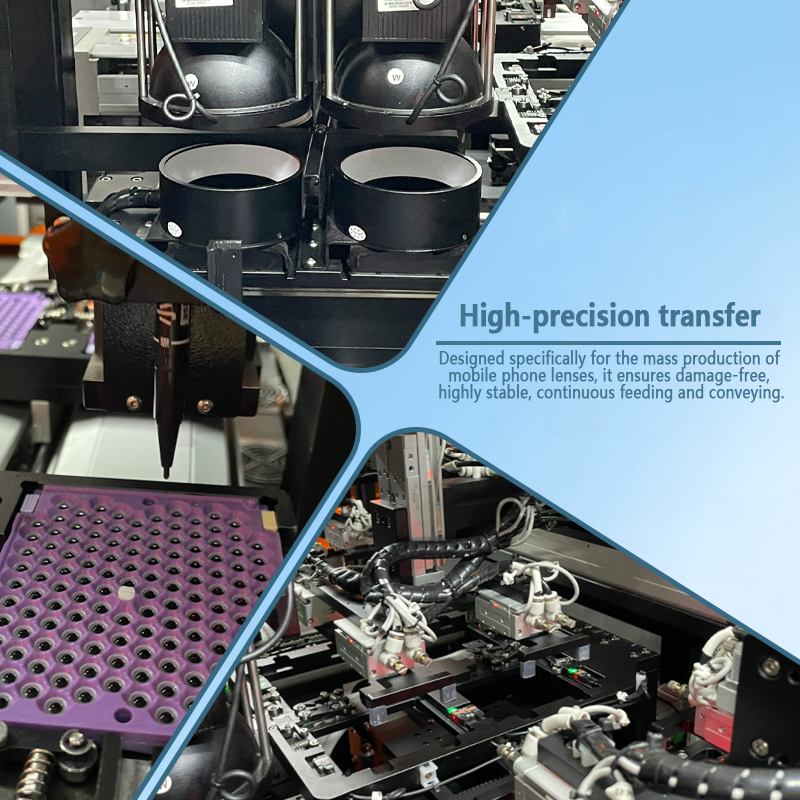
Comprehensive Optical Inspection: Utilizing a combination of multi-angle LED light sources, high-resolution industrial cameras, and telecentric lenses, the system performs 360° imaging inspection of the lens surface, edges, apertures, and corner radii (R-angles). It can detect a wide range of defects, including micron-level scratches, bubbles, black/white spots, edge chipping, cracks, stains, and coating irregularities.
High-Precision Dimensional Measurement: Equipped with an image-based measurement system and a calibration module (utilizing fixed-scale and pixel-ratio comparison), the machine delivers high-precision measurements of critical dimensions—such as outer/inner diameters, hole spacing, thickness, roundness, and parallelism. With a repeatability of ±0.01mm, it ensures that product dimensions consistently meet the stringent requirements for mobile phone assembly.
Multi-Defect Identification: The system accurately identifies various types of defects, including surface scratches, bubbles, impurities, edge chipping, cracks, uneven coatings, misaligned screen printing, off-center apertures, and dimensional deviations, covering all standard quality control criteria for mobile phone lenses.
Automated Sorting and Rejection: Following inspection, the system automatically separates acceptable parts from defective ones based on preset criteria. Defective units are categorized by defect type, while acceptable units are counted and automatically loaded into trays or collection containers—achieving a fully automated process from inspection and decision-making to rejection.
Scratch-Resistant Flexible Transport: All contact points with the lenses utilize non-metallic, polished materials or anti-static Teflon coatings. This prevents scratching of the lens surfaces and optical coatings during transport and inspection, ensuring the pristine finish of the products.
Rapid Multi-Specification Switching: By swapping out feed tracks and inspection fixtures, and adjusting optical parameters, the system can quickly adapt to mobile phone lenses of various sizes and shapes—including circular, square, custom-contoured, and multi-camera module lenses. Changeover time is kept to under 20 minutes.
Statistical Traceability and System Integration: The built-in data statistics system records total inspection volume, pass/fail counts, and the distribution of specific defect types in real time. Data can be exported or uploaded to a factory MES (Manufacturing Execution System), with full support for integration and synchronized operation with upstream and downstream equipment.
Application Scenarios: This system is ideally suited for large-scale, standardized, in-line 100% inspection of appearance and dimensions. It is widely used in the manufacturing of mobile phone components (camera lenses, screen cover glass, fingerprint sensor covers, and flash lenses), the processing of optical components (optical lenses, filters, and windows), and the production of consumer electronics (such as lenses for smartwatches and tablets). With its high-efficiency, high-precision, and non-contact inspection capabilities, the Guanshentai automatic mobile phone lens inspection machine empowers manufacturers to achieve comprehensive quality control, ensuring that all outgoing products meet the stringent requirements for mobile phone assembly and optical performance.