Release Date:2026-11-16 15:43:23 Popularity:
The automatic visual inspection machine for mobile phone lenses is an intelligent inspection device that combines an industrial camera, a light source system, image processing software, a mechanical positioning mechanism, and an automatic control system. The equipment acquires images of the surface and edges of mobile phone lenses, then analyzes the images using visual algorithms to determine whether the product meets requirements based on preset inspection standards. Compared to traditional manual visual inspection, the automatic visual inspection machine can complete image acquisition and result judgment according to unified inspection rules, reducing the impact of human factors on the inspection process. Depending on the product structure and customer process requirements, it can also be configured with functions such as automatic feeding, precise positioning, automatic sorting, and data recording.
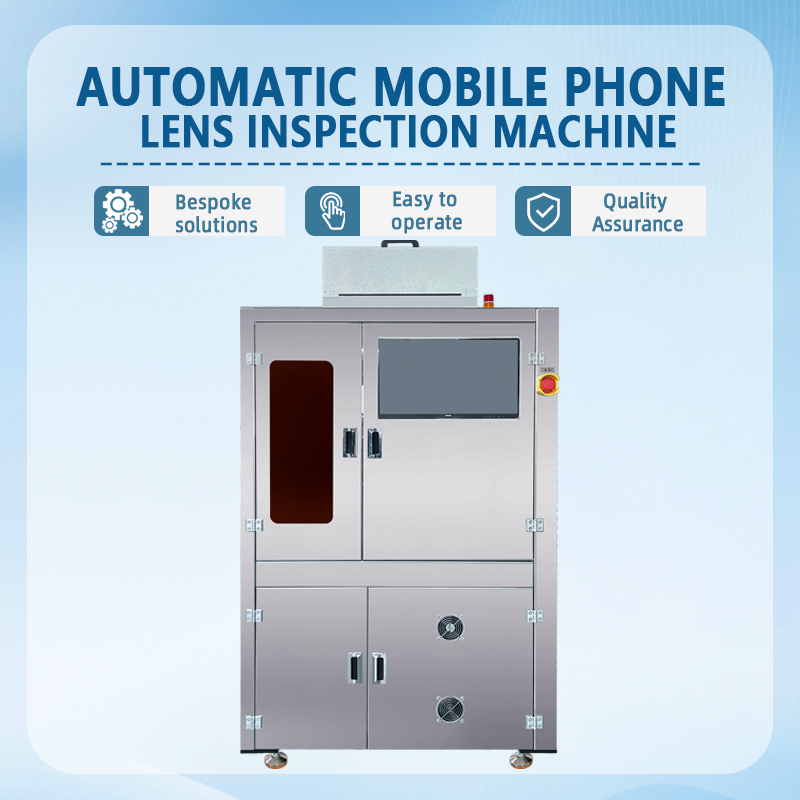
What items can an automatic visual inspection machine for mobile phone lenses inspect?
Different types of mobile phone lenses vary in material, size, structure, and quality standards. Specific testing items need to be configured according to product requirements. Common testing items include:
Surface appearance defect detection: Using industrial cameras and appropriate light sources, scratches, stains, dirt, bubbles and other visible abnormalities on the lens surface can be identified to assist companies in product quality screening.
Edge and contour detection: Image analysis is performed on the edges, chamfers and outlines of the lens to determine whether there are problems such as chipped edges, gaps or abnormal shapes.
Size and position inspection: Based on product inspection standards, the length, width, aperture position and related geometric dimensions of the lens are measured to help companies control product processing quality.
Printing and Marking Inspection: For lenses with patterns, markings, or specially processed areas, the printing location, pattern integrity, and related appearance features can be inspected according to actual needs. It is important to note that different defects require different imaging methods and algorithms; the actual inspection results need to be tested and verified in conjunction with the sample, defect type, and inspection standards.
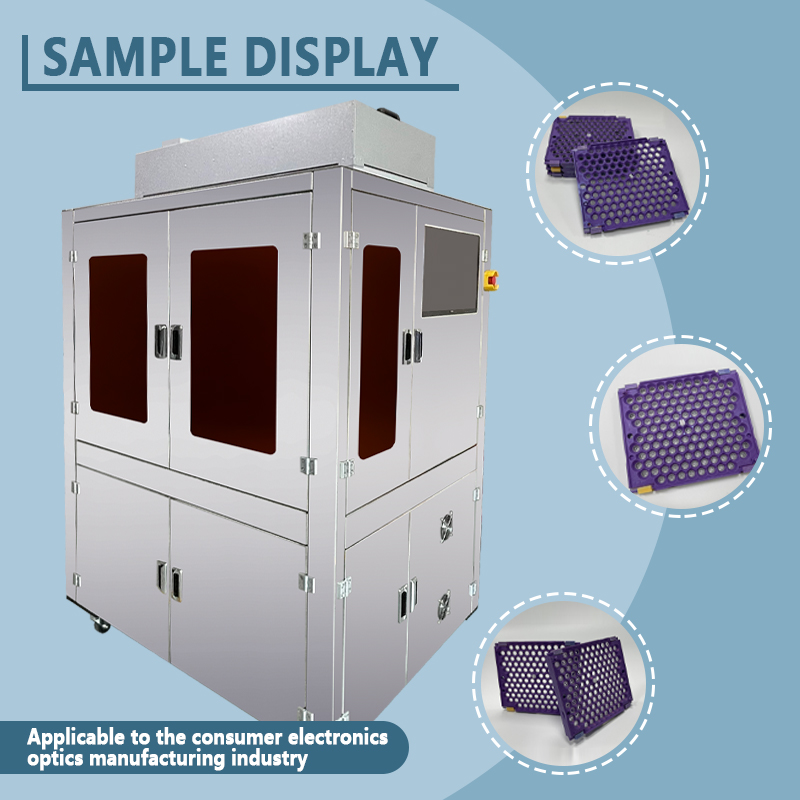
What are the advantages of an automatic visual inspection machine for mobile phone lenses ?
GST focuses on the research and development and manufacturing of automated equipment, providing automated equipment and non-standard customized solutions for precision parts, medical consumables, plastic products and other manufacturing fields.
Improve inspection efficiency: Automated visual inspection equipment can continuously acquire and process images according to a set program, reducing the time spent on manual inspection of each item, making it suitable for mass production scenarios.
Improve detection consistency: By using unified imaging conditions and detection algorithms, the differences in judgment between different operators can be reduced, making the detection standards more standardized.
Reduced manual inspection workload: The equipment can handle highly repetitive visual inspections and dimensional judgments, reducing the workload of manual visual inspections and helping companies optimize production staffing.
Facilitates production quality management: Automated testing systems can record test results and product classification information according to configuration, providing data support for enterprises to carry out quality traceability, defect analysis and production process optimization.
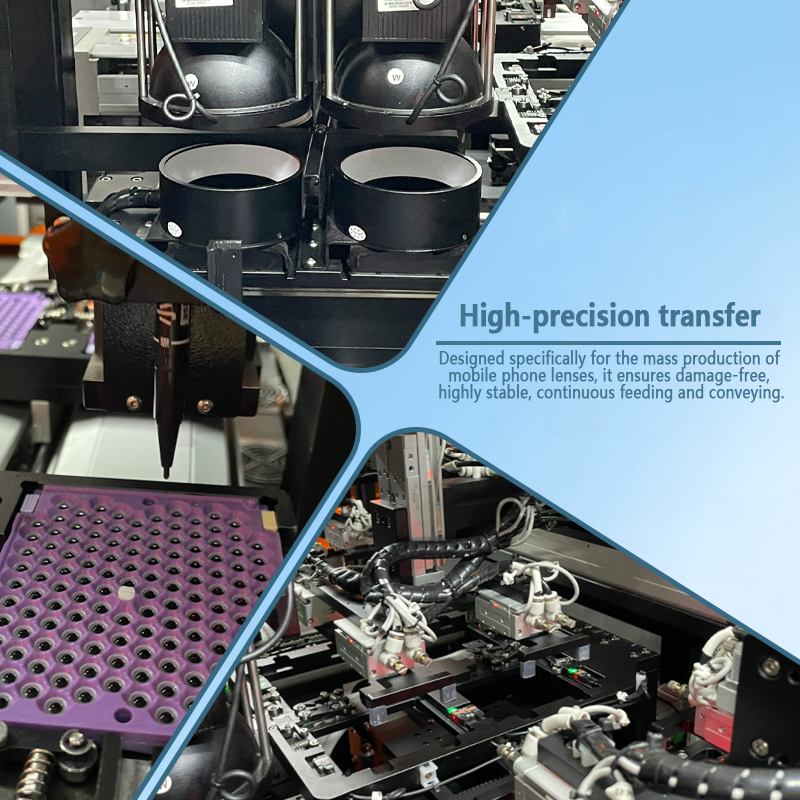
Automated visual inspection machines for mobile phone lenses are crucial equipment for mobile phone component manufacturers to automate appearance inspection. By combining industrial vision technology with automated control systems, inspection efficiency can be improved, inspection consistency enhanced, and support provided for production quality management. When purchasing such equipment, companies should select appropriate solutions based on lens material, defect type, inspection accuracy, and production cycle time. Choosing manufacturers with capabilities in visual inspection R&D and non-standard automated customization will help upgrade mobile phone lens production and inspection processes towards intelligence and efficiency.