Release Date:2026-09-10 15:23:45 Popularity:
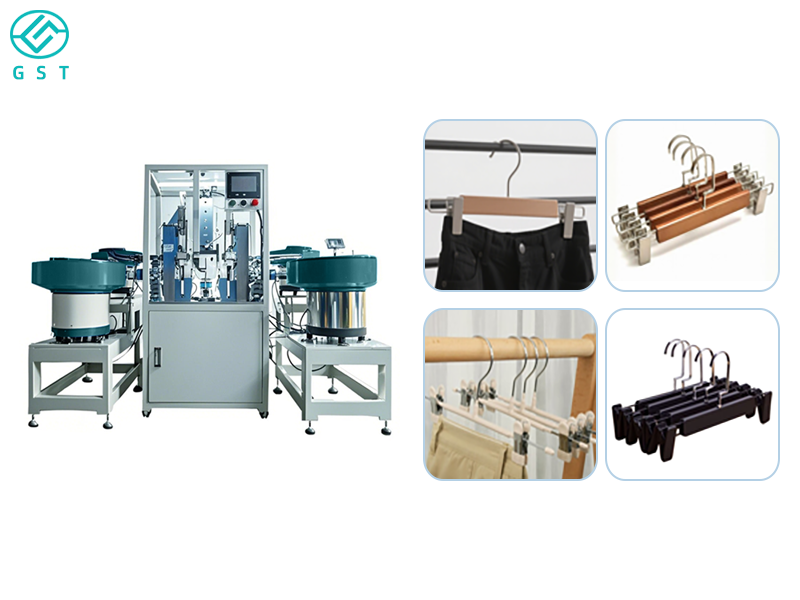
Automated hanger production equipment is designed specifically for the manufacturing processes of plastic, metal, and flocked hangers, as well as related products. Depending on the specific product structure, the equipment can perform functions such as automatic loading and feeding, positioning, hook insertion, assembly, pre-treatment for flocking, adhesive application, visual inspection, and packaging. Utilizing technologies such as PLC control systems, servo motion control, robotic arms, sensors, and machine vision, the various process steps operate in coordination according to programmed sequences; this minimizes manual intervention while enhancing production efficiency and product consistency. Compared to traditional manual production methods, these automated systems are better suited for large-scale manufacturing and can be custom-engineered to meet specific client requirements regarding product dimensions and processing techniques.
Key Advantages of Automated Hanger Production Equipment
Increased Production Efficiency: Traditional hanger manufacturing involves highly repetitive and labor-intensive tasks, such as manual hook insertion, assembly, and sorting. Automated equipment seamlessly integrates multiple process steps—enabling continuous feeding, positioning, and processing—to boost hourly output and help enterprises shorten production cycles and delivery times.
Enhanced Assembly Precision: The assembly positioning of hooks, clips, and other components directly impacts the hanger's functionality. Through precision positioning mechanisms and specialized tooling, automated equipment ensures accurate component placement, minimizing issues such as missing parts, incorrect assembly, or misalignment, thereby improving product consistency.
Reduced Labor Costs: As labor costs rise, hanger manufacturers need to automate repetitive roles. Automated equipment can take over tasks like loading, hook insertion, assembly, and processing, thereby reducing expenses related to staffing, training, and management.
Improved Product Quality: Standardized machine operations minimize variations caused by human error. By automatically controlling production parameters and incorporating features like visual inspection, the system can promptly detect missing parts, assembly anomalies, and cosmetic defects, ensuring higher finished-product quality and production stability.
Support for Diverse Hanger Specifications: Customer requirements vary regarding hanger size, color, structure, and hook style. Specialized manufacturers of automated hanger equipment can design custom jigs, feeding mechanisms, and control programs tailored to specific products, thereby enhancing the equipment's production versatility.
Facilitates seamless automation upgrades for the entire line: Beyond standalone operation, this equipment can integrate with automatic packaging machines, visual inspection systems, conveyor systems, and robotic handling units to gradually form a complete, automated hanger production line.
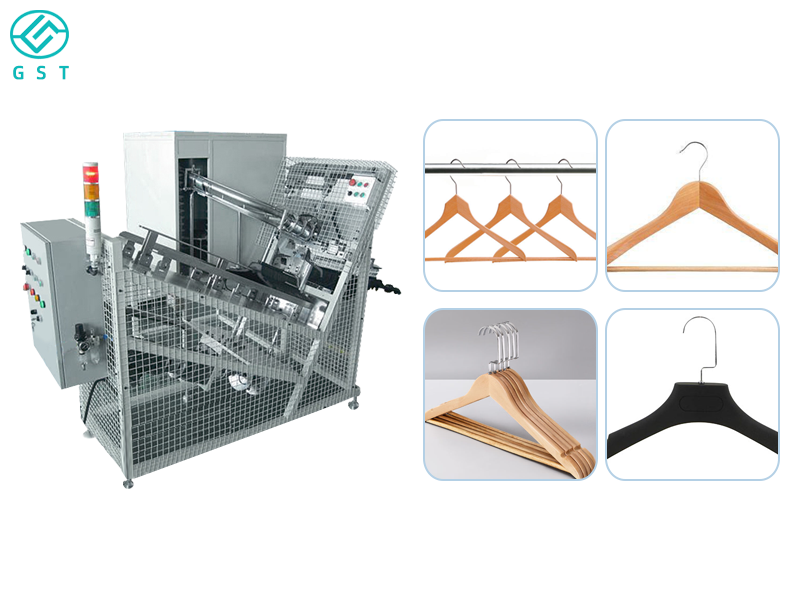
Guanshentai Hanger Automation Equipment Solutions
When selecting automation equipment for hanger manufacturing, enterprises should look beyond the price tag and evaluate the manufacturer's R&D capabilities, capacity for non-standard customization, project experience, and after-sales service system.
First, it is essential to determine whether the manufacturer can design equipment tailored to the specific structural characteristics of the hangers. Variations in hanger dimensions, materials, and hook designs necessitate different approaches to automatic feeding and assembly.
Second, equipment stability is paramount. For high-volume manufacturers, the ability of the equipment to operate continuously directly impacts production schedules; therefore, the reliability of the mechanical structure, electrical control systems, and core components is critical.
Furthermore, the manufacturer's ability to provide comprehensive automation solutions for the entire production line is a key factor. Manufacturers with system integration capabilities can link various processes—such as hook insertion, glue application, assembly, inspection, and packaging—thereby minimizing integration issues between different pieces of equipment.
As a professional manufacturer of hanger automation equipment, Guanshentai has long focused on the R&D and production of non-standard automation equipment, automatic assembly machines, automatic processing equipment, and intelligent production lines, backed by extensive project experience and a team of technical experts.
In the automatic hook insertion process, the equipment utilizes automatic feeding and precision positioning mechanisms to assemble the hanger body and hook, thereby boosting production efficiency. During the glue application process, the system can perform automatic feeding and glue application according to specific process requirements, reducing the need for manual labor. Finally, the packaging stage is handled by equipment that automates counting, bagging, and sealing.
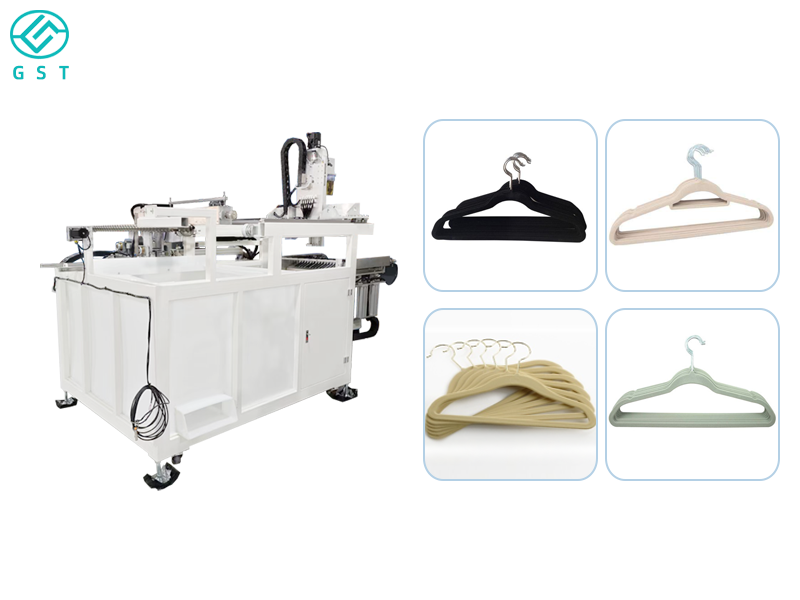
With the continuous advancement of smart manufacturing technology, hanger automation equipment is evolving toward higher speeds, greater intelligence, increased flexibility, and digitalization. To meet market demands for high-variety, low-volume production, equipment designs are increasingly emphasizing modularity and rapid changeover capabilities, enabling enterprises to respond more flexibly to customer orders and product variations. For modern hanger manufacturers, adopting advanced automation equipment not only enhances production efficiency and product quality but also lowers labor costs and reduces production waste, providing strong support for increased market competitiveness.