Release Date:2026-10-30 15:46:06 Popularity:
Automatic hardware parts assembly machines are automated equipment designed for the assembly needs of various hardware components. They can rationally integrate processes such as automatic feeding, part positioning, sequential assembly, pressing, locking, inspection, and finished product unloading according to product structure, assembly technology, and production cycle requirements. Common applications include screws, nuts, washers, springs, pins, clips, and other metal accessories. Depending on the structural characteristics of different products, automatic hardware parts assembly machines can be configured with vibratory feeders, linear feeding mechanisms, robotic arms, servo pressing mechanisms, or vision positioning systems to achieve automatic feeding and precise assembly of different components.

Advantages of automatic hardware assembly machines
Improving production efficiency: Traditional manual assembly requires operators to repeatedly pick up materials, position them, and assemble them. Production speed is easily affected by the operator's skill level and labor intensity. Using automated hardware parts assembly machines can integrate multiple assembly processes, reduce repetitive manual operations, increase production cycle time, and meet the needs of mass production.
Improving product assembly consistency: The assembly position, pressing depth, locking status, and part fit of hardware accessories all affect the quality of the final product. Automated assembly equipment can manage key assembly actions through positioning fixtures, sensors, and controllable actuators, reducing the differences caused by manual operation. For products with high quality requirements, pressure detection, dimensional detection, or visual inspection functions can be added according to process needs.
Reduced labor costs and workload: Automated assembly machines for hardware accessories can reduce manual assembly and repetitive handling, helping companies optimize staffing and reduce reliance on manual labor in the production process. At the same time, automated processes help standardize operating procedures, improve production site management, and increase production organization efficiency.
Supports non-standard customization and multi-process integration: Different hardware products vary in the number of parts, assembly sequence, fitting accuracy, and inspection requirements. Through non-standard automated design, dedicated feeding mechanisms, assembly fixtures, and control systems can be configured according to product characteristics to achieve continuous assembly of multiple parts. For complex products, it is also possible to evaluate the integration of processes such as automatic inspection, screw fastening, pressing, and finished product sorting into the same equipment or production line, reducing manual transfer between processes.
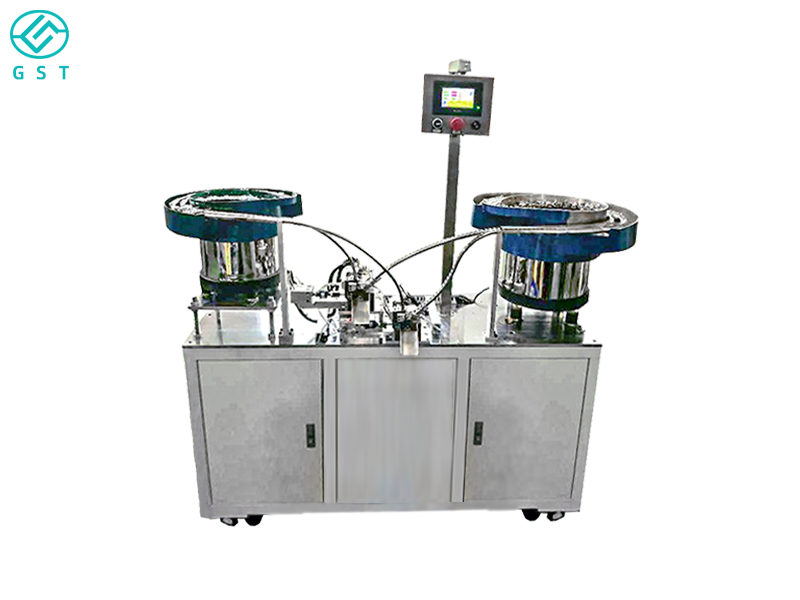
How to Choose an Automatic Assembly Machine for Hardware Accessories
When selecting an automatic assembly machine for hardware accessories, companies should focus on product compatibility, assembly accuracy, production cycle time, equipment stability, and subsequent maintenance costs. Before purchasing, it is recommended to prepare product drawings, parts samples, assembly procedures, key quality requirements, and target production capacity to help equipment manufacturers evaluate the assembly process and equipment configuration.
At the same time, attention should be paid to whether equipment can be easily changed, whether abnormal conditions can be promptly alarmed, whether key components are easy to maintain, and whether necessary safety protection functions are provided. If the product requires testing of assembly integrity, the testing items and judgment standards should be clearly defined in advance to ensure that the equipment solution meets actual production requirements.
GST specializes in automated equipment and non-standard automation solutions, providing customized equipment design and integration services based on customers' product structure, assembly processes, and production needs. For automatic assembly machine projects for hardware accessories, we can conduct solution evaluations focusing on automatic feeding, precise positioning, parts assembly, press-fitting and locking, quality inspection, and finished product unloading. We will plan suitable automated equipment configurations based on product characteristics and on-site production conditions.
For manufacturing companies seeking to improve production efficiency, reduce reliance on manual labor, and enhance assembly consistency, Guanshengtai can assist in assessing the customization options for non-standard automated assembly equipment based on product samples, technical drawings, and capacity requirements provided by the client. Specific equipment functions, assembly precision, and production cycle time should be determined based on actual project evaluation and technical solutions.
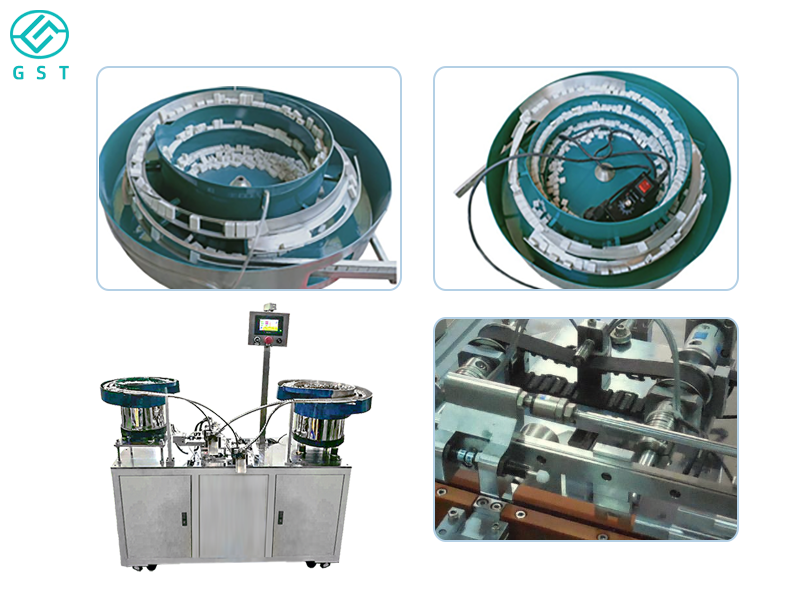
With the continuous development of industrial automation technology, automatic assembly machines for hardware parts have become important equipment for manufacturing enterprises to improve assembly efficiency and optimize production processes. Through reasonable automation design and process integration, enterprises can reduce repetitive manual operations, improve product assembly consistency, and lay the foundation for subsequent intelligent manufacturing upgrades. More and more companies are introducing automatic assembly machines for hardware parts to optimize production processes, improve assembly efficiency and product quality, and enhance their market competitiveness through automated equipment.