Release Date:2026-11-28 16:16:32 Popularity:
The automatic assembly machine for stool testing tubes is a non-standard automated device designed according to the product structure and production process of stool testing tubes. It is mainly used for the automatic feeding, positioning, assembly, and testing of various components of stool testing tubes. Depending on the structural characteristics of different products, the equipment can integrate functions such as automatic tube feeding, tube cap feeding, sampling component assembly, capping or pressing, product testing, and finished product collection. Through mechanical transmission mechanisms, precision positioning fixtures, sensors, and a PLC control system, it achieves automated connection of multiple production processes, reducing manual operation and improving the continuity and stability of the production process.
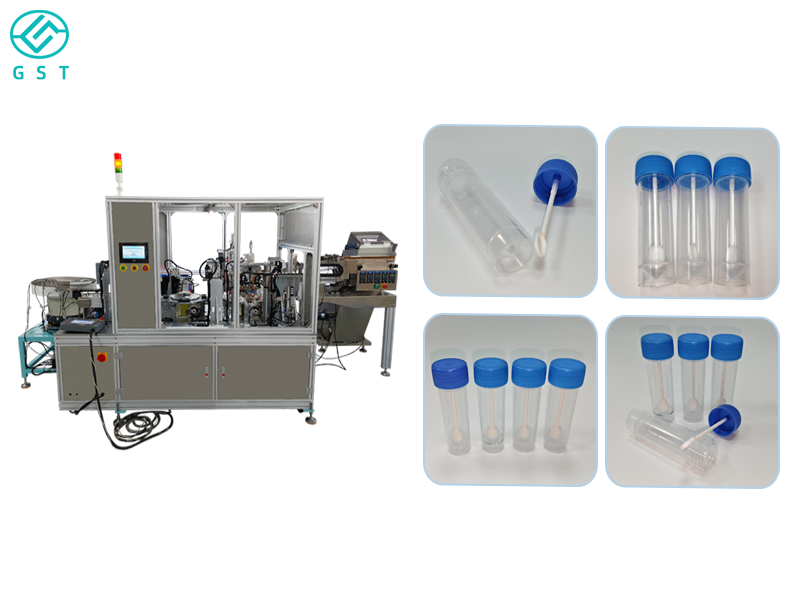
What are the advantages of an automatic stool sample collection machine?
Automated assembly improves production efficiency: In the traditional production of stool test tubes, some assembly processes require manual completion, and the production cycle is easily affected by the skill level and operating conditions of the personnel. Automatic stool test tube assembly machines can automatically complete tasks such as component feeding, positioning, and assembly, reducing manual intervention, shortening process connection time, helping enterprises improve production efficiency, and meeting the needs of mass production.
Precision positioning improves product assembly consistency: Inspection tubes typically consist of a tube body, a cap, and related sampling components, with corresponding assembly requirements between different parts. Automated assembly machines, through precision positioning mechanisms and a stable control system, ensure that each component is assembled according to a preset process, helping to reduce human error and improve the consistency and stability of product assembly.
Integrated inspection functions enhance product quality: Based on product quality requirements, the automatic assembly machine for inspection tubes can be equipped with functions such as visual inspection, component presence detection, assembly in place detection, and capping status detection. It can promptly identify problems such as missing parts, incorrect parts, and assembly abnormalities, and work with an automatic sorting mechanism to handle unqualified products, helping enterprises improve quality management efficiency.
Reducing labor costs and optimizing production management: Automated equipment can integrate multiple independent assembly processes, reducing manual handling, repetitive positioning, and product transfer, thus optimizing personnel allocation. At the same time, the equipment controls the production process through a unified program, helping companies achieve standardized production management and reduce overall operating costs.
For stool sample tubes of different specifications and structures, the equipment structure can be adjusted according to the actual needs of customers to meet the production requirements of multiple product varieties. With its advantages of automation, precision, and high efficiency, the automatic stool sample tube assembly machine is gradually becoming an important piece of equipment for medical consumable manufacturers to achieve intelligent upgrading.
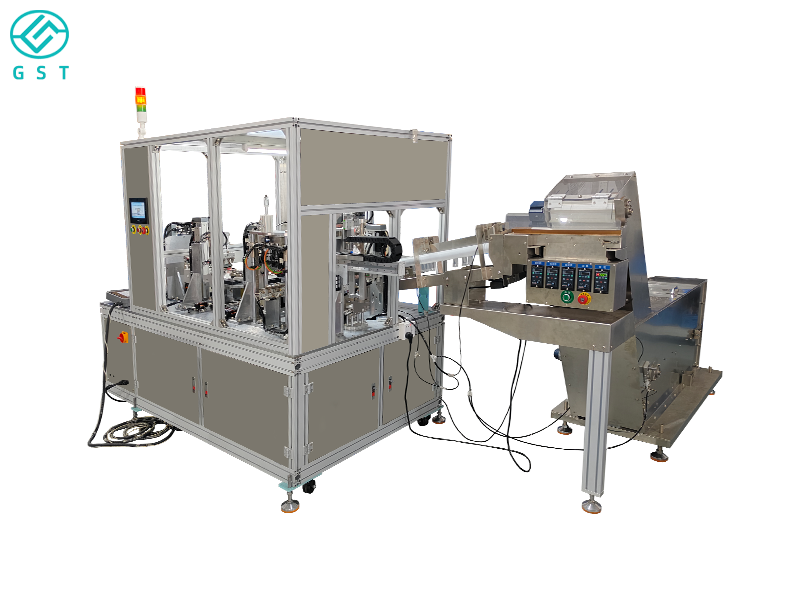
How to choose a suitable automatic stool collection tube assembly machine
When selecting an automatic assembly machine for toilet pipe inspection, enterprises need to conduct a comprehensive evaluation based on product specifications, structural characteristics, number of parts, and assembly process.
First, the dimensions and assembly method of the inspection tube body, cap, and sampling components should be clearly defined to confirm whether the equipment can meet the production requirements of existing products. Second, the positioning accuracy, assembly speed, operational stability, and automatic detection capabilities of the equipment should be given special attention. Furthermore, it should be considered whether the equipment supports product replacement for different models, and whether subsequent maintenance and technical services are adequate.
Since the test tubes produced by different manufacturers vary in terms of product structure and process requirements, choosing a manufacturer with the capability to customize non-standard automated equipment can allow for the design of a customized equipment solution based on actual production needs.
GST focuses on the research, design and customization of automated equipment, providing automated assembly equipment, automated testing equipment and automated production line solutions for industries such as medical consumables, laboratory consumables and plastic products.
To meet the specific needs of stool test tube manufacturers, Guanshengtai can customize and develop automatic stool test tube assembly machines based on product structure, component specifications, assembly processes, and target production capacity. By integrating functions such as automatic feeding, precise positioning, automatic assembly, online testing, and finished product collection, it helps companies reduce manual operations, optimize production processes, and improve assembly efficiency and product consistency.
From initial process analysis and solution design to equipment manufacturing, installation and commissioning, Guanshengtai focuses on matching equipment with customers' actual production needs, providing customers with personalized non-standard automated equipment customization services.
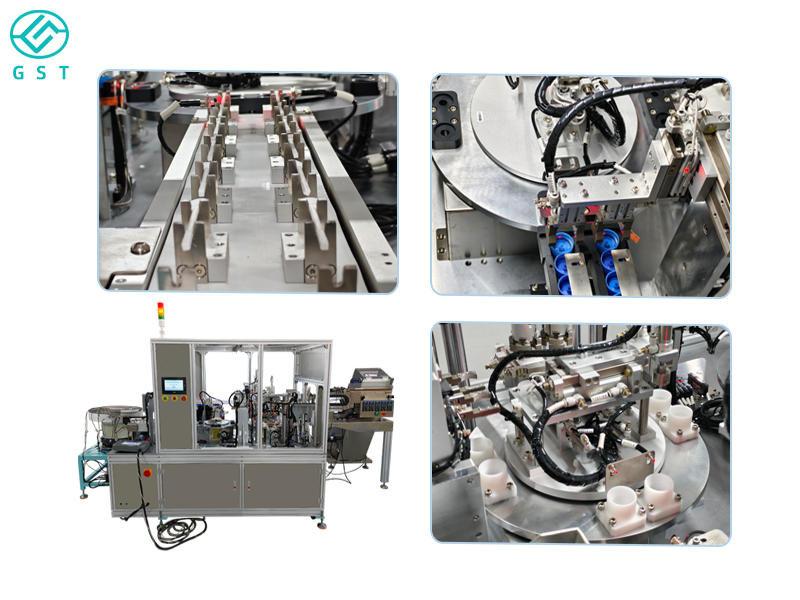
As the medical testing consumables industry moves towards automation, precision, and large-scale production, automated stool sample assembly machines will become crucial equipment for companies to improve production efficiency and product quality. By introducing automated assembly technology, companies can reduce manual labor, enhance assembly consistency, and optimize production management. GST can provide customized solutions for automated stool sample assembly machines and non-standard automated production lines based on customer product characteristics and production process requirements, helping medical consumables manufacturers achieve efficient and stable intelligent production upgrades.