Release Date:2026-08-08 15:55:20 Popularity:
An automated production line is a continuous production system that links multiple manufacturing processes using automated equipment, industrial robots, servo controls, machine vision, sensors, and intelligent control systems. Unlike traditional manual production, automated lines can automatically execute tasks—such as loading, conveying, positioning, processing, assembly, inspection, packaging, and unloading—based on preset programs, thereby achieving a continuous and standardized workflow. Depending on product characteristics, these lines can be applied across various industries, including medical consumables, electronics, hardware components, plastic products, food packaging, consumer goods, and automotive parts.
What are the advantages of automated production lines?
Significantly improved production efficiency: Boosting efficiency is one of the most immediate benefits of automated production lines. While traditional manual production is susceptible to variables such as workforce size, skill levels, and individual performance, automated lines operate continuously at a fixed pace. Automated loading, assembly, inspection, and packaging minimize downtime between steps, ensuring seamless and efficient integration across production stages. For enterprises handling large order volumes, automated lines effectively increase output per unit of time and shorten production cycles.
Enhanced product quality consistency: Manual operations inherently involve variability; differences in individual habits and skill levels can lead to inconsistent product quality. Automated lines execute tasks according to standardized programs, effectively minimizing human error. Technologies such as servo positioning, precision mechanical structures, and machine vision inspection improve assembly precision and inspection accuracy, resulting in more stable product quality.
Reduced labor costs: Lowering labor input is another key advantage. Automated equipment can replace human labor in highly repetitive or physically demanding tasks. By reducing the number of manual roles, enterprises can also cut costs associated with employee training, management, and turnover. Although automated lines require an initial investment in equipment, the long-term benefits of continuous, stable production help lower overall operating costs.
Standardized production processes: In traditional manufacturing, different workers may employ varying methods, making it difficult to fully standardize the workflow. Automated production lines translate proven manufacturing processes into standardized equipment actions, ensuring that every workstation operates according to a unified program. This not only facilitates production management but also helps the enterprise establish a stable quality management system.
Enabling in-line inspection and quality traceability: Modern automated production lines go beyond simple machining and assembly; they integrate systems such as machine vision, dimensional inspection, leak testing, and functional testing. When defective products are detected during production, the system can automatically identify, sort, and log them, while leveraging data acquisition systems to track production information. This intelligent inspection capability enables enterprises to detect production issues promptly and mitigate the risk of batch quality defects.
Enhancing the enterprise's smart manufacturing capabilities: Automated production lines can interface with MES, ERP, the Industrial Internet, and data management systems to enable real-time collection and management of production data. Management can use these systems to monitor equipment status, production volume, yield rates, and cycle times, thereby gaining data-driven insights for production planning and business decision-making. Consequently, automated production lines serve as a crucial foundation for an enterprise's transition toward a digital factory.
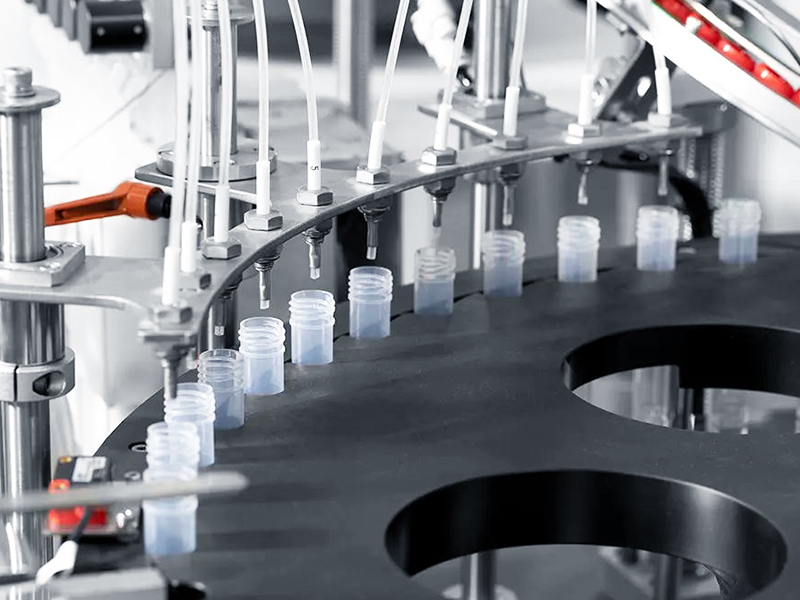
Guanshentai Automated Production Line Solutions
As a professional enterprise dedicated to the R&D and manufacturing of automation equipment, Guanshentai has long focused on automated production lines, custom (non-standard) automation equipment, automatic assembly systems, intelligent inspection equipment, and automated packaging machinery.
Guanshentai develops comprehensive automation plans tailored to a client's specific product structure, manufacturing processes, production capacity requirements, and factory layout. We provide one-stop automation solutions covering everything from initial process analysis and system design to mechanical manufacturing, electrical control integration, installation, commissioning, and after-sales service.
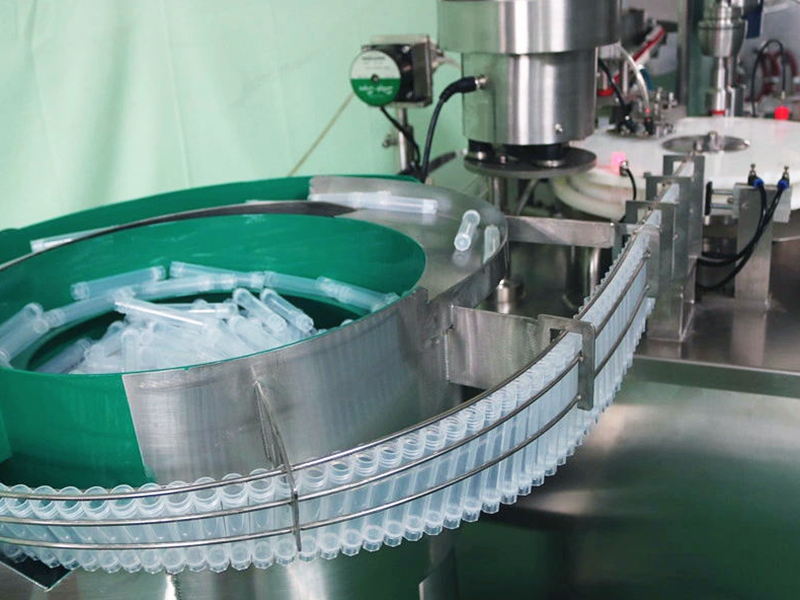
In the medical consumables sector, Guanshentai designs production lines for products such as pipettes, centrifuge tubes, reagent kits, syringes, and sampling swabs—incorporating automated feeding, assembly, welding, inspection, and packaging. In industrial manufacturing, we design automatic assembly and inspection equipment for components like O-rings, check valves, and hardware fittings. In the packaging sector, we offer automated solutions for filling, labeling, case sealing, and strapping.
By integrating various automation modules, Guanshentai helps enterprises build production systems that are more efficient, stable, and intelligent.
Driven by advancements in artificial intelligence, machine vision, industrial robotics, and the Industrial Internet, automated production lines are evolving toward greater flexibility, intelligence, and digitalization.
Future automated production lines will not only execute production tasks but also perform intelligent analysis based on production data. This enables equipment status monitoring, automatic product changeovers, quality traceability, and remote maintenance, thereby empowering manufacturers with greater production flexibility and efficiency.
Overall, the advantages of automated production lines extend beyond increased efficiency and reduced labor costs; they also include improved product quality, standardized production processes, intelligent management capabilities, and enhanced corporate competitiveness.
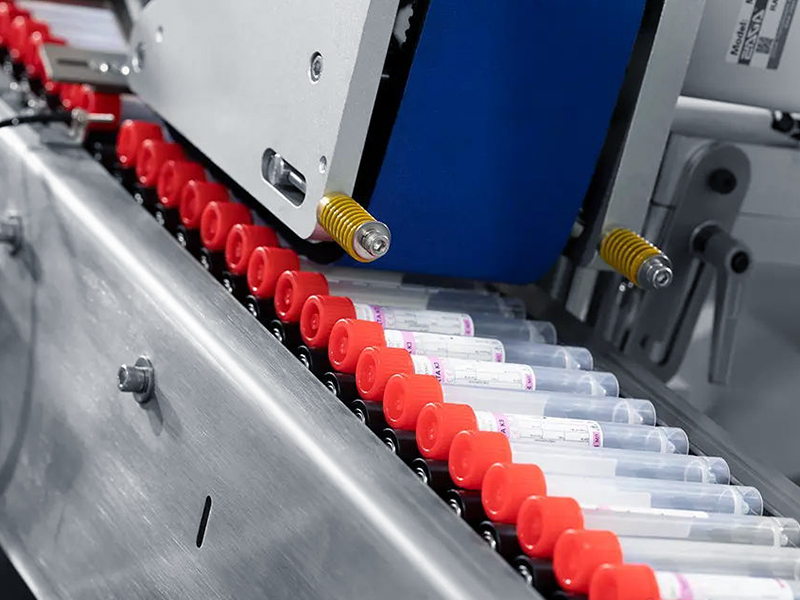
As the manufacturing industry continues to move toward digitalization and intelligence, an increasing number of enterprises are transitioning from traditional manual production models to automated ones. So, what are the advantages of automated production lines? Why are more and more enterprises choosing automated equipment and intelligent production lines? As a company specializing in the R&D and manufacturing of automated equipment, Guanshentai leverages its extensive project experience to provide customers with customized automated production line solutions, helping enterprises reduce costs, increase efficiency, and improve quality.