Release Date:2026-09-15 14:46:01 Popularity:
An automatic screw assembly machine is an automated device developed for the assembly process of screws, nuts, and related components. It can automatically feed, dispense, position, pick up, fasten, inspect, and unload screws according to product structure and production requirements. The equipment typically consists of an automatic feeding system, a feeding mechanism, a screw fastening mechanism, a precision positioning mechanism, a servo execution system, a PLC control system, and a detection module. Through the coordinated operation of these functional mechanisms, repetitive manual operations such as screw picking, placement, and tightening can be transformed into an automated production process. Depending on the product structure and assembly requirements, the automatic screw assembly machine can adopt single-axis, multi-axis, or robotic fastening schemes, and can be equipped with special fixtures according to the workpiece shape to achieve multi-station synchronous operation, meeting the automated assembly needs of different types of products.

The core advantages of automatic screw assembly machines
Improving production efficiency: Traditional manual screw fastening requires multiple actions such as picking up materials, aligning, and tightening, and the production cycle is affected by the skill level of the employees. Automatic screw assembly machines can continuously and automatically feed and fasten materials, reducing manual operation and process waiting time, effectively increasing the output per unit time, and are suitable for mass production scenarios.
Improving screw fastening accuracy: The force, depth, and position of screw fastening directly affect the product assembly quality. Automatic screw assembly machines employ servo control, precise positioning, and torque control technology, enabling stable fastening according to set parameters. This reduces problems such as missed fastening, loose fastening, stripped threads, and incomplete fastening, thus improving product assembly consistency.
Reducing labor costs: Screw assembly is a typical repetitive task, and relying on manual labor for a long time not only results in high labor costs but also easily leads to operator fatigue. Automated equipment can replace a large number of repetitive fastening tasks, reducing manual input, while also reducing personnel training, management, and rework costs, achieving long-term and stable cost reduction and efficiency improvement.
Supports online quality inspection: Modern automatic screw assembly machines can integrate functions such as screw presence/absence detection, tightening torque detection, tightening height detection, and machine vision inspection. The equipment can perform real-time judgment on each assembly station, automatically alarming or sorting upon detecting abnormalities, thereby improving product quality control capabilities.
Supports multi-screw, multi-station assembly: For products with complex structures, a single machine can be configured with multiple screw-fastening stations, using different screw specifications for different positions to achieve continuous and automatic screw fastening of multiple screws. Multi-axis synchronous operation further improves assembly efficiency and production stability.
Adaptable to different product customizations: Different products vary significantly in screw specifications, fastening positions, fastening depths, and installation angles. Therefore, professional automation equipment manufacturers can customize fixtures, feeding mechanisms, and fastening mechanisms according to customer products, ensuring a high degree of matching between the equipment and the production process.
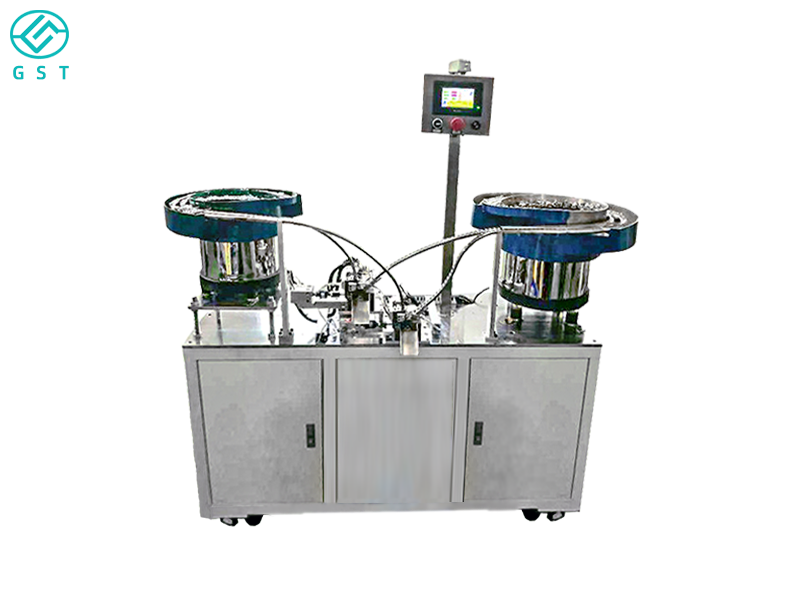
Guanshengtai Automatic Screw Assembly Machine Solution
As a professional manufacturer of automatic screw assembly machines, Guanshengtai has long focused on the research and development and manufacturing of automatic assembly equipment, non-standard automated equipment, intelligent testing equipment and automated production lines, and has rich project experience and a professional technical team.
Guanshengtai can provide customized automated screw assembly solutions for enterprises based on their product structure, screw specifications, screw quantity, production cycle, and site layout. The equipment can be configured with functions such as automatic feeding, automatic material handling, vision positioning, robotic arm placement and removal, automatic fastening, torque detection, screw presence/absence detection, and automatic unloading, achieving full automation of the screw assembly process.
In the electronics manufacturing industry, it can be used for automatic screw fastening of electronic housings, circuit board assemblies, connectors and small electrical products; in the hardware industry, it can be used for the assembly of metal parts, hardware components and mechanical parts; in the plastic products industry, it can be applied to the automatic screw assembly of plastic housings, household goods and consumer electronics products.
In addition, Guanshengtai can also integrate automatic screw assembly machines with automatic feeding machines, machine vision inspection, robot handling, automatic packaging and MES production management systems to create a complete automated assembly line, helping companies achieve continuous production from parts feeding to finished product output.
When purchasing automatic screw assembly machines, in addition to focusing on the price of the equipment, companies should also pay close attention to the manufacturer's mechanical design capabilities, electrical control capabilities, automatic feeding technology, fastening accuracy, project experience, and after-sales service level.
First, a suitable automatic feeding and fastening scheme must be determined based on the screw specifications, product material, installation method, and fastening position. Second, the operational stability of the equipment needs to be considered. Automatic screw assembly machines require multiple mechanisms to operate synchronously; the coordination between feeding, positioning, fastening, and inspection directly affects equipment efficiency and yield.
Furthermore, the equipment's scalability is also crucial. Reputable automation equipment manufacturers should be able to add modules such as visual inspection, automated packaging, and robotic handling to meet future business needs, facilitating future upgrades.
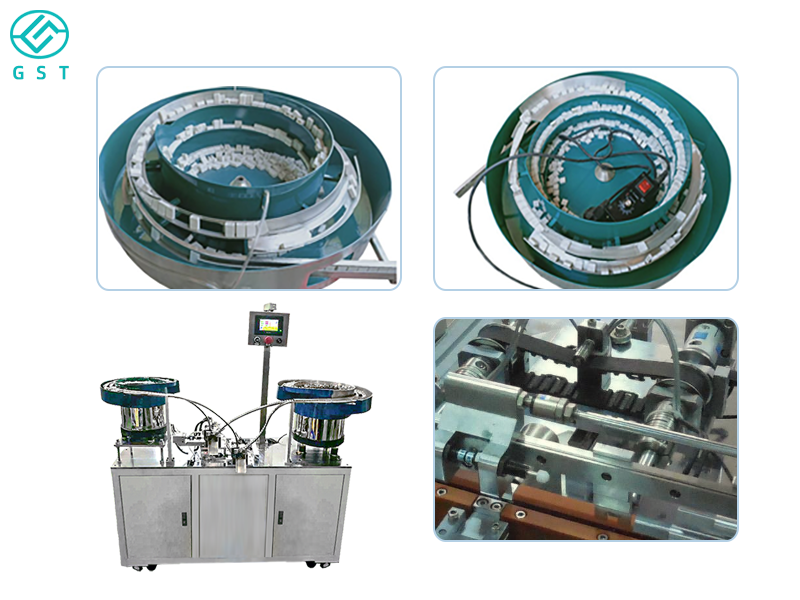
With the continuous maturation of industrial robots, machine vision, artificial intelligence, and industrial internet technologies, automatic screw assembly machines are upgrading towards higher speeds, greater intelligence, greater flexibility, and digitalization. Simultaneously, multi-axis synchronization, robot collaboration, rapid changeover, and modular design will become important development directions for automatic screw assembly equipment, enabling enterprises to more flexibly adapt to the production needs of diverse product types and specifications. For modern manufacturing enterprises, introducing advanced automatic screw assembly machines not only improves assembly efficiency and fastening accuracy but also reduces labor input, lowers overall operating costs, and further enhances product quality stability.