Release Date:2026-11-07 16:29:58 Popularity:
There is no uniform price for fully automated filling production lines ; the price depends on a comprehensive assessment of equipment configuration, production speed, filling materials, product specifications, and level of automation. Different types of filling production lines vary significantly in their mechanical structure and functional configuration. For example, ordinary liquid filling production lines differ from high-precision quantitative filling production lines in their metering systems, filling methods, and control systems; similarly, single filling equipment differs from a complete production line integrating automatic feeding, filling, capping, labeling, testing, and packaging in terms of the number of devices and overall design. Furthermore, if a company requires non-standard customization for specific products, it must also consider the costs of equipment research and development, process verification, and on-site installation and commissioning. Therefore, a specific quote needs to be determined by a professional manufacturer based on actual production needs.

Main factors affecting the price of fully automated filling production lines
Types of materials to be filled: Different materials have different requirements for filling equipment. Liquids, pastes, powders, and granules differ in terms of flowability, viscosity, and metering methods. For example, liquid filling typically uses piston-type, flow meter-type, or weighing-type metering methods, while paste filling requires a filling mechanism configured according to the material's viscosity. Material characteristics directly affect equipment structure and manufacturing costs.
Production speed and capacity requirements: Different companies have different requirements for production efficiency, and therefore different equipment configurations. For ordinary production needs, standard-speed filling equipment can be selected. If large-scale continuous production is required, a high-speed automated control system and a reasonable configuration of feeding, filling, and conveying mechanisms are necessary.
Automation configuration: Fully automated filling production lines can be equipped with functions such as automatic bottle handling, automatic feeding, quantitative filling, automatic capping, automatic labeling, visual inspection, and finished product conveying, depending on the production process. The more complete the functions, the higher the degree of integration of the production line, and the higher the corresponding equipment design and manufacturing costs will be.
Product specifications and customization requirements: Different products have different bottle types, capacities, packaging dimensions, and production processes, which also affect the adaptability requirements of the equipment. If compatibility with multiple bottle types and filling capacities is required, or if special positioning and anti-drip functions are needed, targeted design is required, which will also affect the equipment price.
Equipment materials and control systems: The materials used in the parts of the equipment that come into contact with materials, the quality of mechanical components, sensor configurations, and the brand of the control system all affect the cost of the entire production line. Companies should select appropriate equipment configurations based on industry requirements and the production environment.
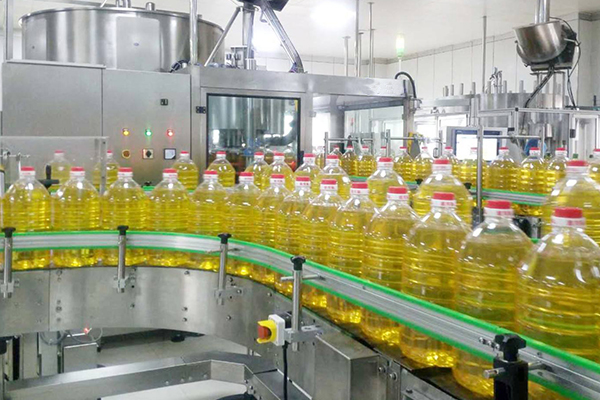
What are the advantages of a fully automated filling production line?
Fully automated filling production lines can integrate traditional, scattered manual operations into a continuous automated production process, enabling automatic product conveying, quantitative filling, sealing, and finished product output.
First, automated equipment can reduce manual intervention and improve production efficiency; second, precise metering systems help improve the consistency of filling capacity and reduce material waste; third, automated connection of multiple processes can reduce manual handling and repetitive operations, and optimize production management.
For companies that need to produce in large quantities over a long period of time, configuring a suitable fully automated filling production line can help reduce overall production costs and improve the company's market competitiveness.
When purchasing fully automated filling production lines, companies need to comprehensively evaluate the manufacturer's technological R&D capabilities, mechanical design level, equipment manufacturing experience, and after-sales service. Before purchasing, information such as filling materials, product capacity, packaging specifications, target production capacity, and production site should be clearly defined. Additionally, it's essential to understand whether the equipment supports switching between multiple product specifications, the ease of future maintenance, and whether functional upgrades can be made to meet the company's production needs.
For companies with complex production processes or unique product specifications, it is recommended to choose manufacturers with the capability to customize non-standard automated equipment to obtain a comprehensive solution that better matches actual production needs. For the production needs of liquids, pastes, and other different materials, Guanshengtai can plan and customize equipment around processes such as automatic feeding, precise metering, automatic filling, automatic sealing, automatic testing, and finished product conveying, helping companies optimize production processes and improve production efficiency and product quality.
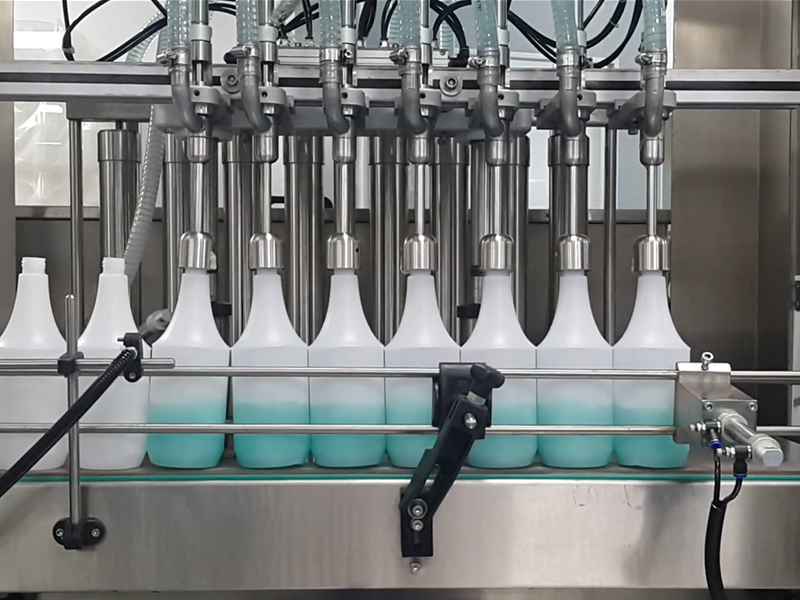
The cost of a fully automated filling production line depends on a comprehensive evaluation of the filling materials, production capacity, equipment configuration, level of automation, and non-standard customization requirements. When purchasing, companies should select a suitable equipment solution based on their own production processes, paying attention to both initial purchase costs and long-term operational stability and maintenance costs. GST specializes in the R&D and manufacturing of automated equipment and the customization of non-standard automated equipment. We can provide automated filling equipment and automated production line solutions tailored to customers' product characteristics, production processes, and capacity requirements.