Release Date:2026-05-23 15:51:31 Popularity:
In automated production lines, the material feeding stage is regarded as the critical first gateway; it directly determines the continuity of the production rhythm and the stability of product quality. From the precision assembly of electronic components to the clean-room manufacturing of biopharmaceutical consumables, and extending to the continuous packaging of food and beverages, an increasing number of enterprises are introducing automated feeding equipment. By effectively replacing arduous manual handling, they are achieving 24-hour continuous production, thereby boosting machine utilization rates from 65%—typical of manual operations—to as high as 92%. However, faced with the vast array of automated feeding machines available on the market, accurately selecting the right model has become the primary challenge confronting many equipment procurement specialists.
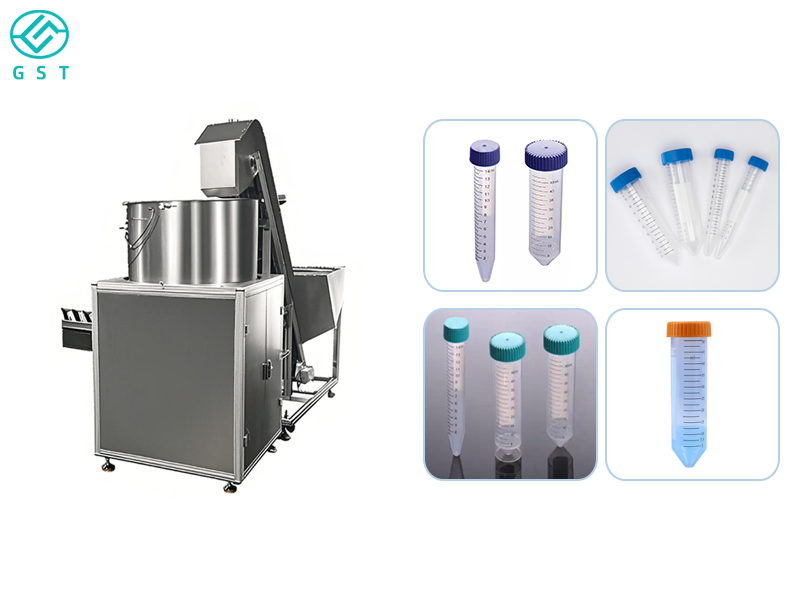
In the realm of industrial automation, automated feeding machines are categorized into various technical types based on differing material characteristics, production demands, and process requirements. The following are several of the most common types of feeding devices currently utilized on production lines:
1. Vibratory Bowl Feeders represent the most classic category of feeding equipment. By generating high-frequency excitation forces through electromagnetic vibration, these devices cause materials within the bowl to gradually ascend along a spiral track while simultaneously aligning themselves in a specific orientation. Their primary advantage lies in their exceptionally high feeding speed and their excellent compatibility with small, regular-shaped parts with rounded edges (such as resistors, capacitors, fasteners, etc.). For materials that are delicate, sensitive, or prone to scratching, a Flexible Vibratory Feeder is a more suitable choice. Building upon the foundation of traditional vibratory bowls, this advanced system integrates a high-precision machine vision system; this enables the flexible sorting of randomly presented materials while effectively preventing material damage, making it widely applicable in the assembly of precision electronic components and medical devices.
2. Screw, Belt, and Bucket Feeders serve as the workhorses for conveying powdered and granular materials. Screw Feeders employ a helical screw propulsion mechanism, offering advantages such as dust-proof enclosure, precise volume control, and a compact structure; they are particularly well-suited for clean-room environments sensitive to dust contamination, such as those found in the food and pharmaceutical industries. Belt Feeders, conversely, are designed for the continuous, bulk conveyance of lumpy or bagged materials, boasting a conveying capacity that can range from 500 to 10,000 kg per hour. Bucket elevators are specifically designed for the vertical lifting of granular and lumpy materials, characterized by a compact footprint and a high lifting capacity.
3. Vacuum and pneumatic feeders represent the ideal choice for the long-distance conveying of powdery materials and for feeding operations within cleanroom environments. Vacuum feeders utilize the principle of negative pressure to achieve fully enclosed conveying, effectively preventing dust spillage and cross-contamination. Pneumatic vacuum feeders, powered by compressed air, operate without motors, friction, or heat generation; they boast exceptional explosion-proof capabilities and are particularly well-suited for flammable and explosive environments—such as those involving pharmaceutical raw materials and fine chemicals—enabling completely sterile conveying that meets GMP requirements.
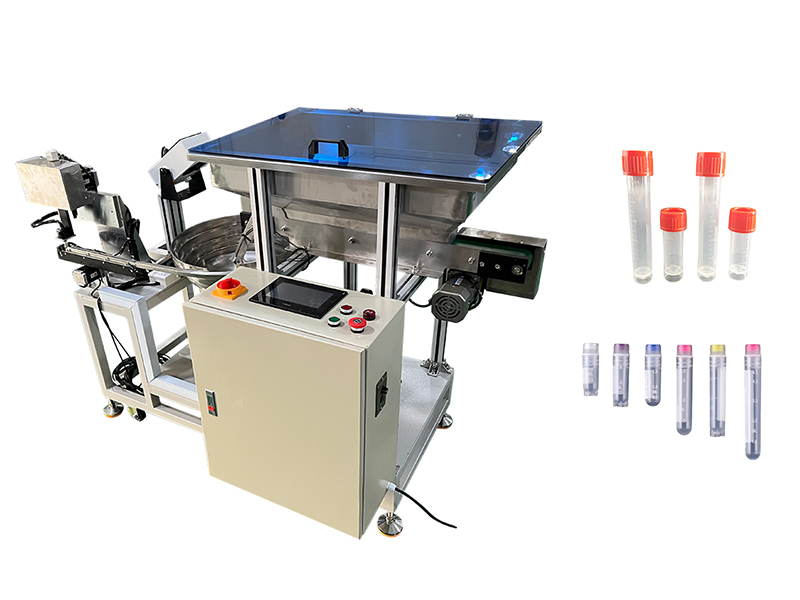
Furthermore, in fields such as precision electronics, semiconductors, and medical consumables, magazine-style feeding mechanisms are well-suited for space-constrained environments due to their compact structure and stable feeding characteristics. Rotary table feeding mechanisms, conversely, enhance overall efficiency by enabling simultaneous operations across multiple stations; they are frequently employed in semiconductor packaging and automotive component assembly processes.
Beyond mechanical structure, classifying mechanisms based on material form constitutes another critical dimension in the selection process. Based on the geometric shape and physical-mechanical properties of the workpieces, feeding mechanisms can be broadly categorized into six major types: liquid, powder/granular, rod, coil, sheet/plate, and discrete part types. For instance, liquid feeding mechanisms are further subdivided into two main categories: low-viscosity liquids (such as oral solutions and IV fluids) and high-viscosity liquids (such as cold creams and ointments); the conveying principles and structural designs for these two categories differ significantly. When procuring equipment, enterprises must first clearly identify the specific form of the material to be fed, thereby enabling them to select the most appropriate feeding mechanism.
From the perspective of metered supply, automatic feeders can also be broadly classified into two schools: volumetric and gravimetric. Volumetric feeders continuously dispense a specific volume based on a preset rotational speed, making them suitable for materials with stable bulk densities. Gravimetric feeders, on the other hand, utilize a metering unit to monitor the discharge weight in real-time, employing PI control to adjust the rotational speed of the feeding unit; this enables high-precision continuous operation and is particularly well-suited for applications with strict requirements regarding mixing ratio accuracy.
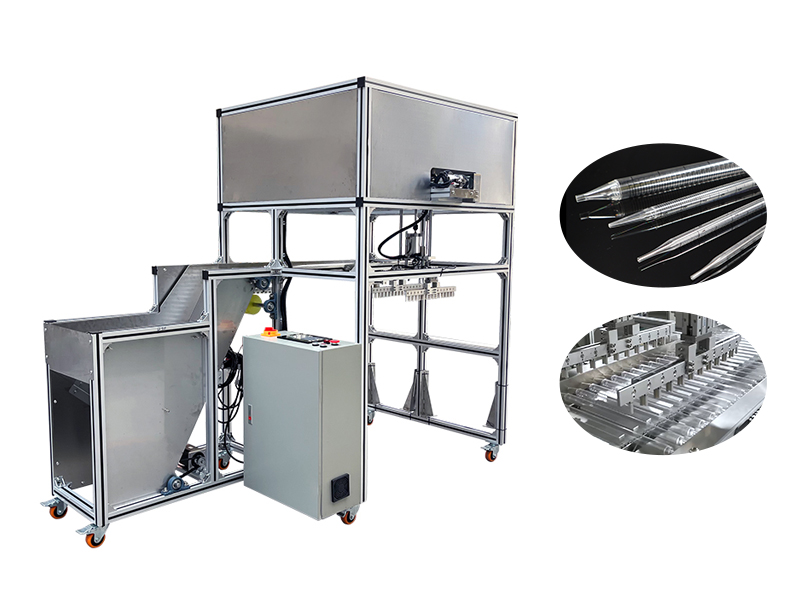
Within the category of gravimetric feeders, a further distinction is made between loss-in-weight feeders and conveyor-belt feeders. Loss-in-weight feeders are typically utilized for the low-to-medium capacity feeding of additives or primary raw materials, whereas conveyor-belt feeders are designed for the high-capacity, continuous feeding of primary raw materials. With the deepening integration of Industry 4.0 and smart manufacturing concepts, an increasing number of enterprises are gravitating toward intelligent feeding systems equipped with sensors and PLC controls. These modern systems not only enable adaptive cycle-time adjustment but also integrate seamlessly with a company's Manufacturing Execution System (MES), thereby facilitating the real-time collection of feeding data and ensuring end-to-end traceability. In summary, when selecting an automatic feeding machine, enterprises should not focus solely on isolated technical parameters; rather, they must undertake a systematic evaluation encompassing factors such as material properties, metering methods, process scenarios, and overall line integration capabilities. Leveraging its extensive technical expertise and flexible customization capabilities, Guanshentai (GST) provides clients with one-stop feeding solutions—ranging from standalone feeding units to fully integrated production lines—thereby empowering an increasing number of manufacturing enterprises to gain a competitive edge in the realms of intelligent manufacturing and automation upgrades.