Release Date:2026-06-03 16:10:47 Popularity:
A fully automated blister packaging production line is a comprehensive equipment system that integrates multiple functions, including automatic feeding, heating and forming, product filling, heat sealing, precision die-cutting, and automatic inspection. Its core process flow involves utilizing the vacuum suction generated by a vacuum pump to form thermoplastic sheets—such as PVC, PET, or PP—into blister shells or trays after they have been heated and softened against a mold. Subsequently, products are automatically filled into the packaging; the system then completes the heat sealing and precision cutting processes, finally outputting the finished products. This entire workflow is automatic, continuous, and highly precise. Centered around a PLC control system, the fully automated blister packaging line integrates visual inspection, servo drive technology, and MES data connectivity capabilities to achieve a fully unmanned production process, spanning the entire journey from raw sheet material to finished product.

The fully automated blister packaging production line is an intelligent packaging system that consolidates automatic blister forming, automatic feeding, automatic loading, automatic sealing, automatic inspection, and automatic unloading into a single unit. Capable of significantly boosting packaging efficiency and reducing production costs, it stands as a vital piece of equipment for modern enterprises striving to implement intelligent manufacturing.
The fully automated blister packaging line primarily comprises a blister forming system, an automatic feeding system, an automatic loading system, a heat sealing system, a punching and cutting system, an inspection system, and an automatic unloading system.
During the production process, blister materials—such as PVC, PET, or PP—are heated and softened before being formed into packaging trays using a mold. Subsequently, products are precisely placed into the blister packaging via an automatic feeding device; the system then automatically executes subsequent processes, including film application, heat sealing, and die-cutting.
Certain high-end production lines can also be equipped with visual inspection systems to perform real-time, in-line checks on packaging integrity, product positioning, and seal quality, thereby ensuring that every single product meets factory quality standards. Finally, the fully packaged products are transported via an automatic conveying system to the subsequent stages—such as carton packing or palletizing—thereby realizing a continuous, unmanned production workflow.
Significant Improvement in Packaging Efficiency: Compared to traditional manual packaging methods, the fully automated blister packaging line enables continuous, high-speed production. This results in a substantial increase in packaging capacity, allowing enterprises to effectively meet the demands of large-volume orders. Reduced Labor Costs: Automated equipment replaces extensive manual operations, effectively minimizing labor input and lowering corporate operating costs.
Enhanced Packaging Quality: The equipment utilizes high-precision control systems to ensure uniform packaging dimensions, secure sealing, and a neat, aesthetically pleasing finish, thereby elevating product quality and market competitiveness.
High Degree of Automation: Enables automated forming, loading, sealing, inspection, and collection, thereby minimizing the need for human intervention.
Support for Intelligent Management: Compatible with MES, ERP, and intelligent warehousing systems, facilitating fully digitized production management.
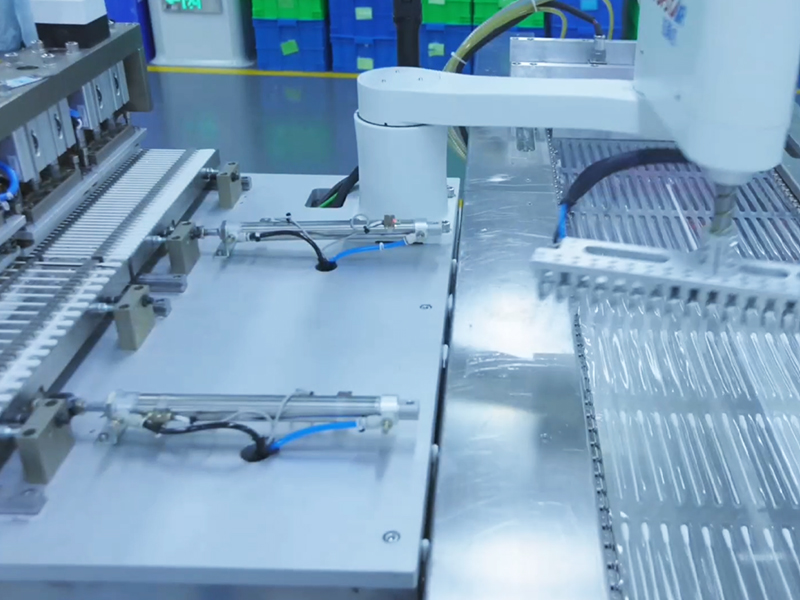
As a specialized manufacturer in the field of automation equipment, Guanshentai has long focused on the R&D and production of automated packaging machinery, providing clients with highly efficient and stable fully automated blister packaging line solutions.
Guanshentai boasts a professional R&D team and extensive project experience, enabling us to provide customized, non-standard automation solutions tailored to specific client product specifications, packaging processes, and production capacity requirements. Our equipment incorporates advanced control systems and precision mechanical structures, characterized by stable operation, low failure rates, and high production efficiency.
Guanshentai’s fully automated blister packaging lines facilitate a seamless, multi-process workflow—encompassing blister forming, automatic feeding, automatic sealing, automatic inspection, and automatic final packaging—and are widely utilized across the medical, biotechnology, electronics manufacturing, and consumer goods industries.
Furthermore, the company offers optional configurations—including robotic loading/unloading systems, vision inspection systems, automatic carton packing systems, and intelligent conveying systems—to assist enterprises in establishing modern, intelligent packaging workshops. When selecting a fully automated blister packaging line, enterprises should prioritize the following key considerations:
Equipment Precision and Stability: Prioritize equipment featuring full servo drives, independent multi-zone temperature control, and vision positioning systems; forming precision and heat-sealing quality are critical factors. Particular attention should be paid to whether high-precision components—such as PLCs and servo motors—are sourced from internationally renowned brands to ensure long-term operational stability.
Intelligence and Inspection Capabilities: Evaluate whether the equipment integrates online inspection modules—such as vision inspection, defect rejection, and pressure feedback systems—to ensure "zero-defect" quality control throughout the packaging process.
Material Compatibility and Changeover Flexibility: Verify that the equipment supports the specific sheet types and thickness ranges utilized by the enterprise, and assess its ability to facilitate rapid mold changes to accommodate multi-specification and small-batch production requirements.
Cleanliness and Regulatory Compliance: For the pharmaceutical and food industries, equipment must feature a closed, dust-proof structure and stainless steel contact surfaces to meet GMP standards and cleanroom production requirements.
Line Integration and After-Sales Service: Evaluate the equipment's capability to integrate and synchronize seamlessly with upstream and downstream machinery (such as automatic feeders, inspection machines, labeling machines, and automatic packaging machines) to form a fully integrated production line. At the same time, it is essential to evaluate whether the equipment supplier possesses comprehensive end-to-end service capabilities—ranging from solution planning and equipment manufacturing to installation, commissioning, and after-sales maintenance.
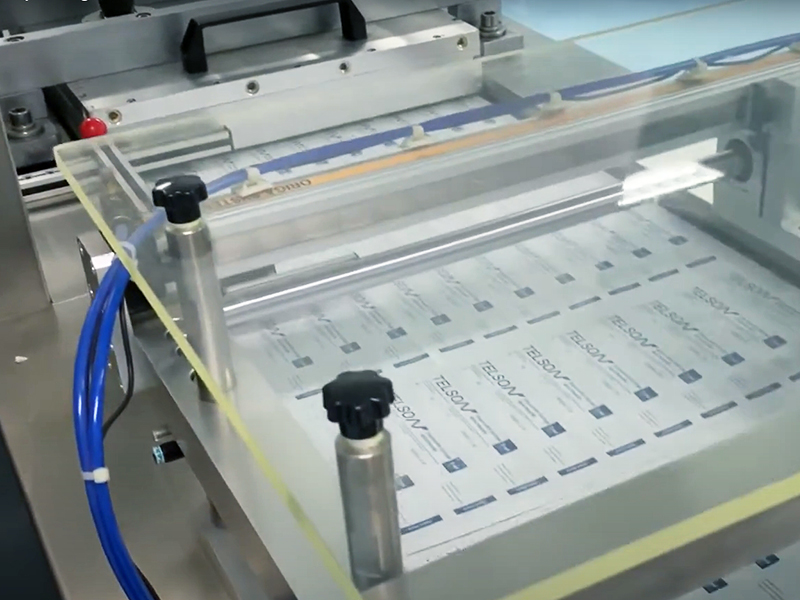
Selecting a fully automated blister packaging production line—one characterized by high precision, exceptional stability, and capabilities for intelligent inspection and data connectivity—serves not only as a powerful tool for enterprises to navigate market competition but also as a solid foundation for their transition toward becoming digital factories. Leveraging its outstanding R&D prowess, robust capabilities in non-standard customization, and comprehensive service system, Guanshentai (GST) is empowering an increasing number of manufacturing enterprises to overcome the production bottlenecks associated with traditional packaging, thereby facilitating their upgrade to intelligent manufacturing through highly efficient and smart packaging solutions.