Release Date:2026-11-02 14:42:04 Popularity:
As the manufacturing industry moves towards intelligence, automation, and precision, product quality inspection has become a crucial aspect of enterprise production management. Traditional manual inspection methods are easily affected by factors such as personnel experience, workload, and the inspection environment, making it difficult to fully meet the efficiency and quality consistency requirements of large-scale production. Therefore, more and more companies are introducing automated inspection equipment. So, what types of automated inspection equipment are available ? Which industries are suitable for different types of inspection equipment? And how should companies choose the appropriate automated inspection solution?
1. What are the common types of automated testing equipment?
Automated visual inspection equipment
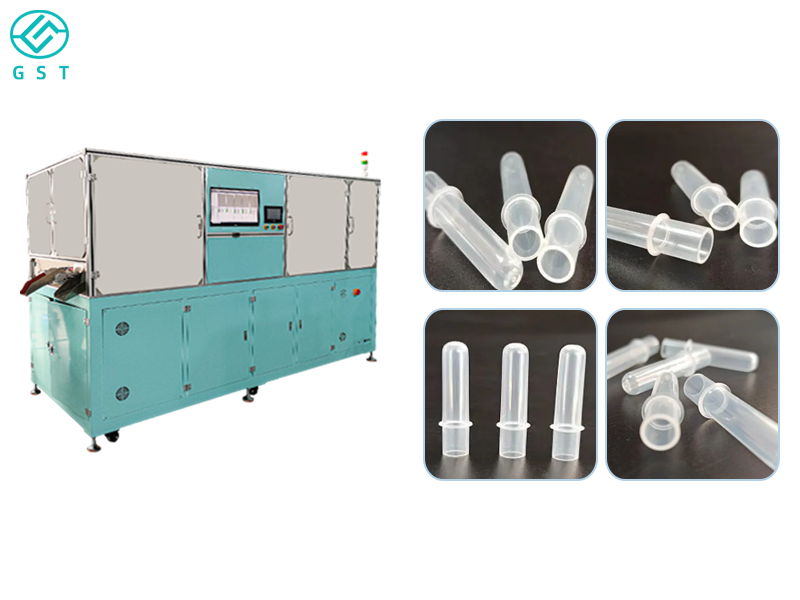
Automated visual inspection equipment utilizes industrial cameras, light sources, image processing systems, and control software to automatically identify and inspect the appearance and specific structures of products. Common inspection items include dimensional deviations, surface defects, printing errors, missing parts, positional misalignments, and assembly anomalies.
These types of equipment are widely used in fields such as plastic products, electronic components, medical consumables, hardware accessories, and packaging products. Through automatic identification and judgment, they can reduce the workload of manual visual inspection and improve the consistency of the inspection process.
Automatic dimensional measuring equipment
Automated dimensional measuring equipment is mainly used to inspect the length, diameter, thickness, height, and other critical dimensions of products. Depending on the accuracy requirements and product characteristics, technologies such as visual measurement, laser measurement, or contact measurement can be employed.
For products such as centrifuge tubes, pipettes, plastic tubing, and precision hardware parts, automated dimensional inspection equipment can help companies quickly screen for dimensional abnormalities and reduce the risk of defective products flowing into subsequent processes.
Automated airtightness and leak detection equipment
Automatic airtightness testing equipment is mainly used to detect whether a product has problems such as leakage, poor sealing, or abnormal connections. Depending on the product structure and testing requirements, pressure decay testing, differential pressure testing, or other applicable testing methods can be used.
Common applications include culture flasks, reagent kits, valves, filters, and various plastic products requiring sealing. For medical consumable manufacturers, customized automated leak detection equipment can be developed based on product application, quality standards, and process requirements.
Automatic function testing equipment
Automated functional testing equipment is mainly used to verify the actual working performance of products, such as whether switching actions, flow rates, pressures, conduction states, and mechanical movements meet specified requirements. The equipment can be combined with sensors, control systems, and specialized testing fixtures to automatically test products and determine the results.
These types of equipment are widely used in the manufacturing of electronics, automotive parts, medical device components, and industrial parts, helping to improve product testing efficiency and the consistency of test results.
Automatic counting, sorting, and inspection equipment
Automated counting and sorting equipment can automatically count, classify, and reject defective products based on product quantity, appearance characteristics, size, or inspection results. For example, automatic centrifuge tube counting equipment, visual sorting equipment for plastic parts, and automatic screening equipment for hardware accessories are all common applications of automated inspection and sorting.
By combining inspection and sorting processes, companies can reduce manual counting and classification work and optimize subsequent packaging and warehousing processes.
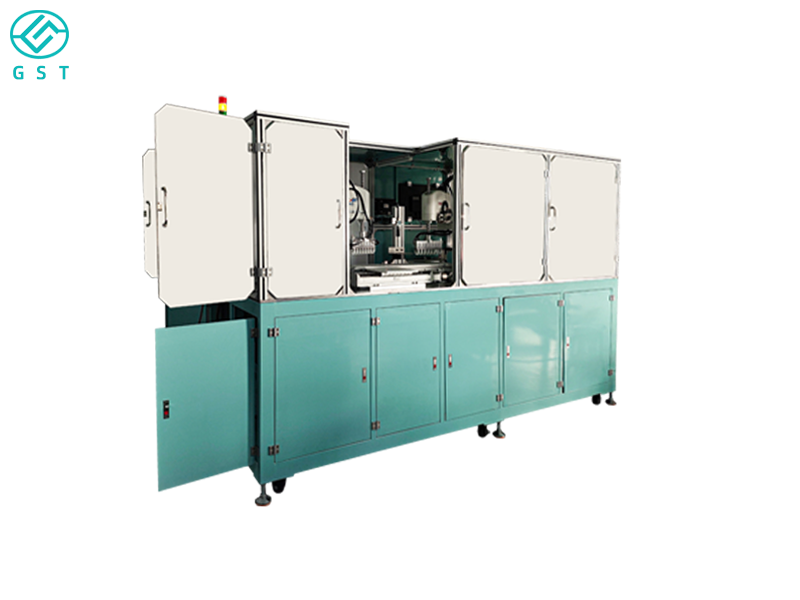
2. Which industries do automated testing equipment mainly apply to?
Automated testing equipment has a wide range of applications. In the medical consumables industry, it can be used for visual inspection of reaction cups, leak detection of culture flasks, reagent kit testing, and appearance inspection of medical plastic parts; in the plastic products industry, it can be used for pipe size inspection, defect identification of injection molded parts, and product sorting; in the hardware manufacturing industry, it can be used for part size measurement, surface defect detection, and assembly integrity inspection; and in the electronics manufacturing industry, it can be used for component positioning, appearance inspection, and functional testing.
Different products have different materials, structures, testing items, and quality standards. Therefore, automated testing equipment needs to be designed reasonably according to actual testing requirements.
When selecting automated testing equipment, companies should focus on the following aspects.
First, clearly define the testing items. Determine in advance the types of defects, size ranges, functional indicators, and acceptance criteria to be tested, to avoid mismatch between equipment functionality and actual needs.
Second, assess the accuracy and efficiency of the inspection. Based on product tolerances, production cycle time, and characteristics of defective products, determine the appropriate inspection technology, camera configuration, sensors, and control scheme.
Third, pay attention to equipment stability. The equipment should be adaptable to the actual production environment and have the necessary abnormal alarm, test result recording, and maintenance functions.
Fourth, consider non-standard customization capabilities. If the product structure is special, the testing process is complex, or it needs to be connected to the existing production line, you can choose equipment manufacturers with non-standard automated design and integration capabilities.
Before purchasing, it is recommended to provide product samples, technical drawings, defect samples, and expected production capacity so that equipment manufacturers can conduct feasibility assessments and testing.
For production scenarios involving medical consumables, plastic products, and industrial components, we can develop equipment solutions tailored to specific project needs, including automated visual inspection, product positioning, dimensional inspection, leak detection, and automated sorting. By rationally integrating inspection agencies with production processes, we help companies optimize their quality inspection processes and improve automation levels.
If a company has specific product testing needs, it can provide Guanshengtai with product samples, testing standards, defect types, and target production capacity to further evaluate equipment configuration and customization options. Specific testing accuracy, production cycle time, and equipment functions will be determined based on sample testing and the final technical solution.
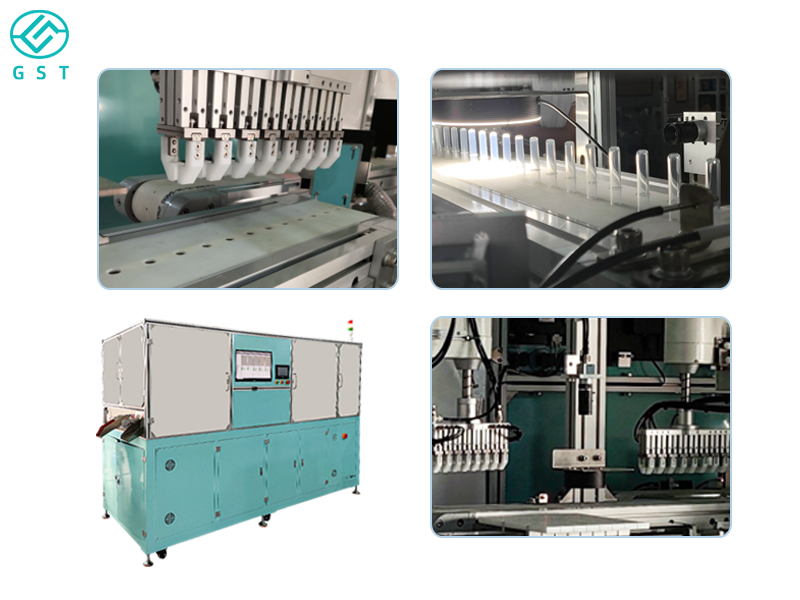
What types of automated inspection equipment are available ? Common types include automated vision inspection equipment, automated dimensional measurement equipment, automated airtightness testing equipment, automated functional testing equipment, and automated counting and sorting equipment. Enterprises should make a comprehensive selection based on product characteristics, inspection standards, production efficiency, and budget requirements. GST specializes in automated equipment and non-standard automated solutions, and can evaluate corresponding automated equipment design and integration solutions based on customers' product structure, inspection processes, and production needs.